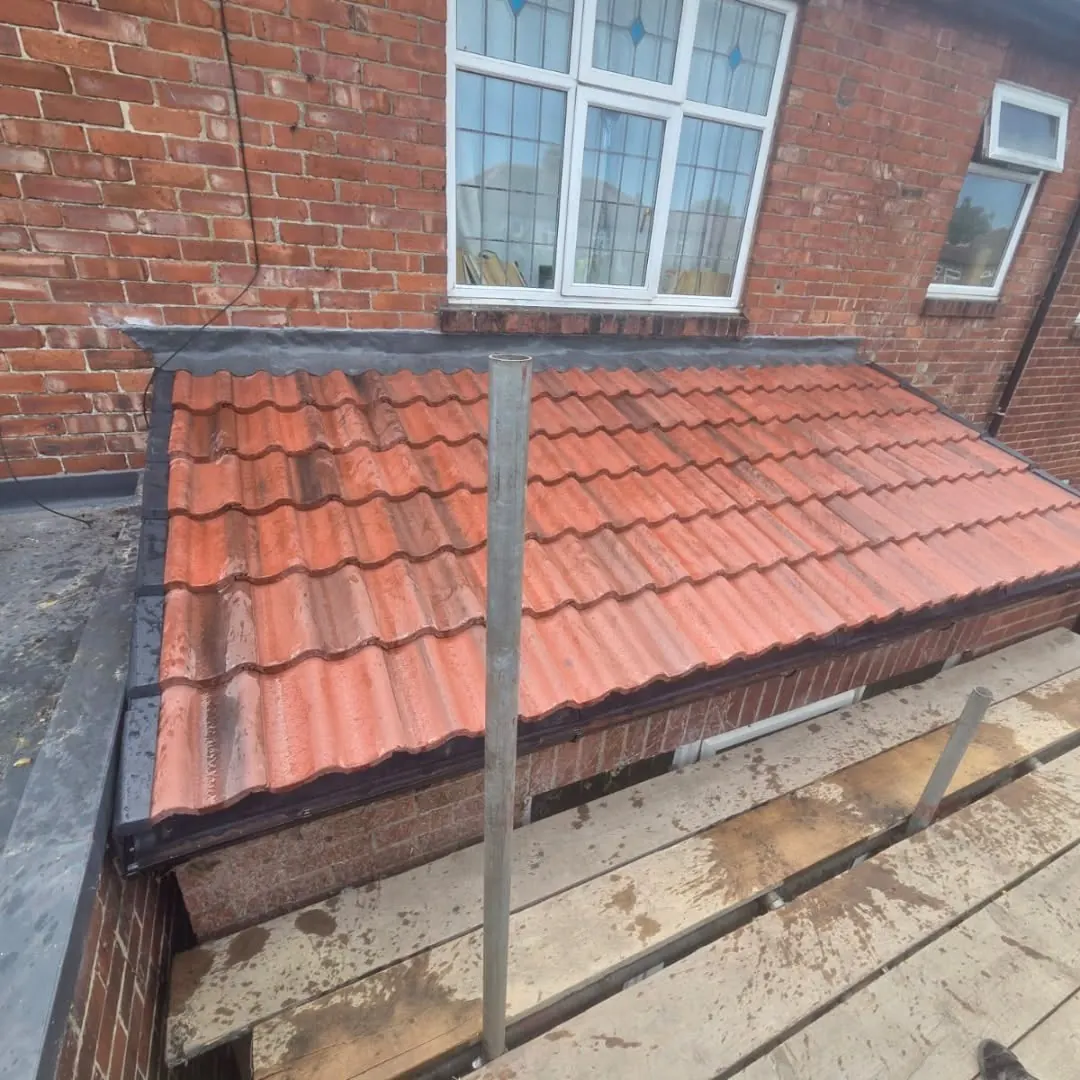
What we found
The roof on this rear extension was not failing because it had worn out. It was failing because it had been built wrong in the first place.
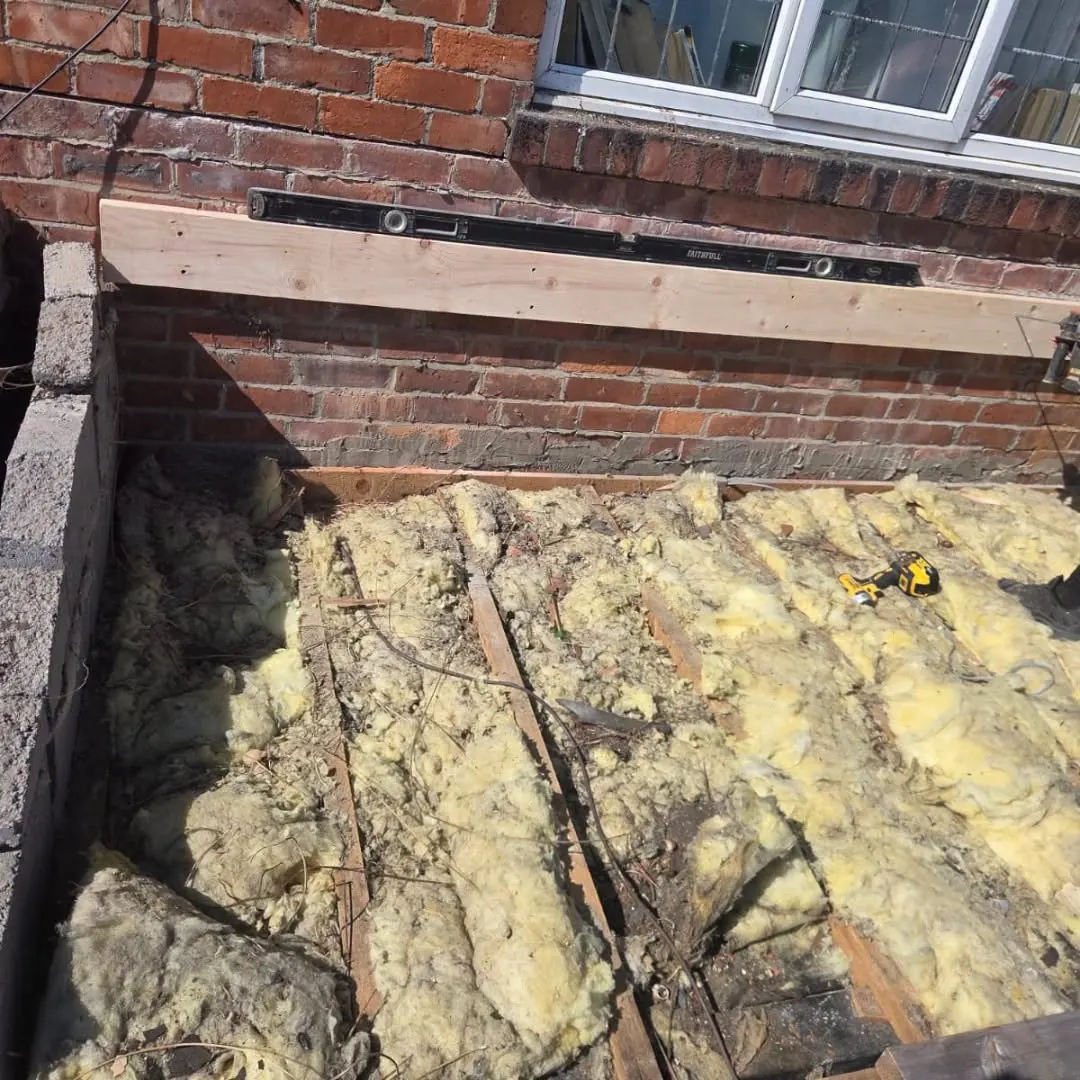
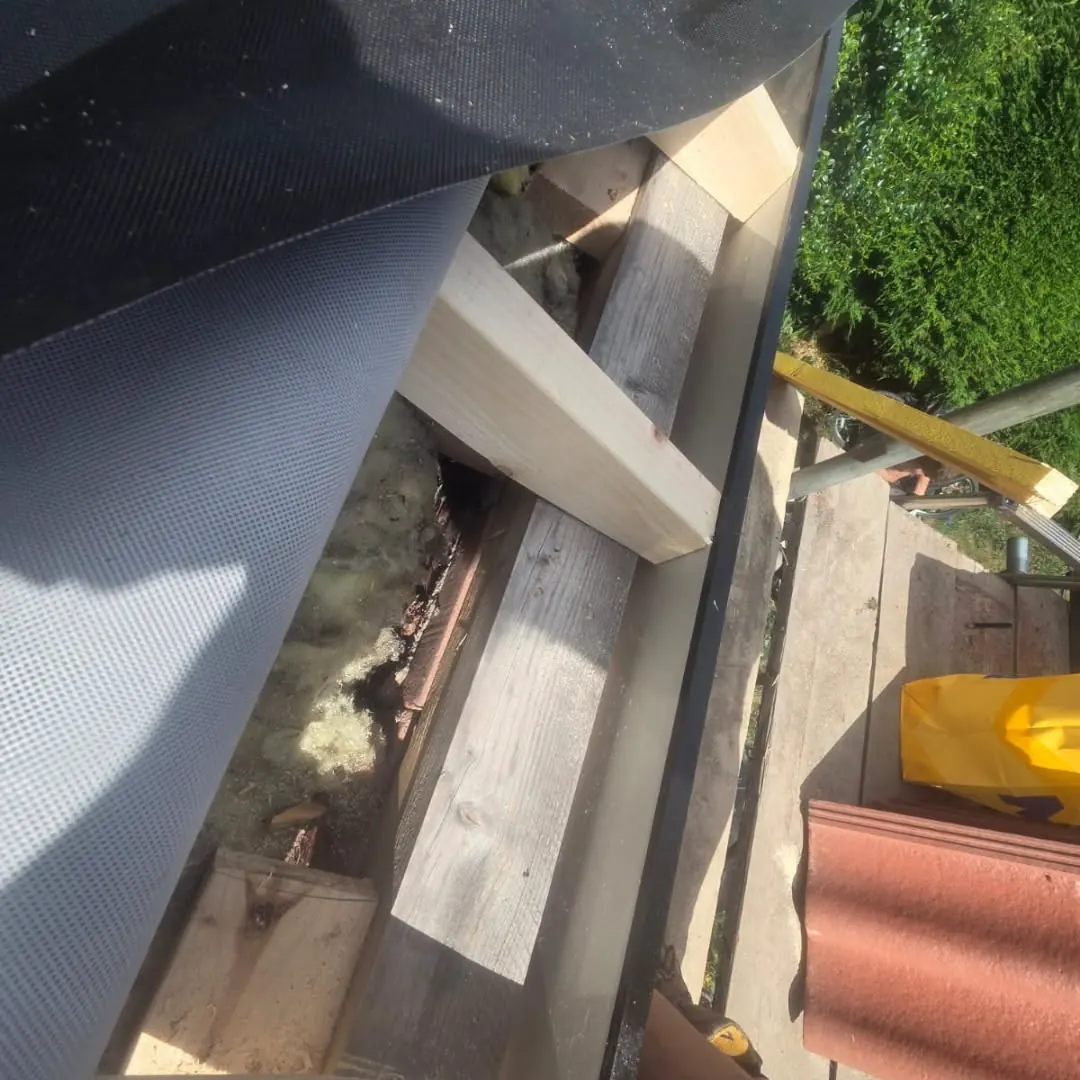
Two things had gone wrong when it was last done. The tiles were not suitable for the pitch of the roof, and the timbers underneath had been poorly fixed. Neither is visible from the ground, and neither announces itself until water starts getting in.
Why the pitch matters
Every roof tile has a minimum pitch it is rated to work at. Below that angle, water no longer runs off fast enough and wind can drive it back up under the laps.
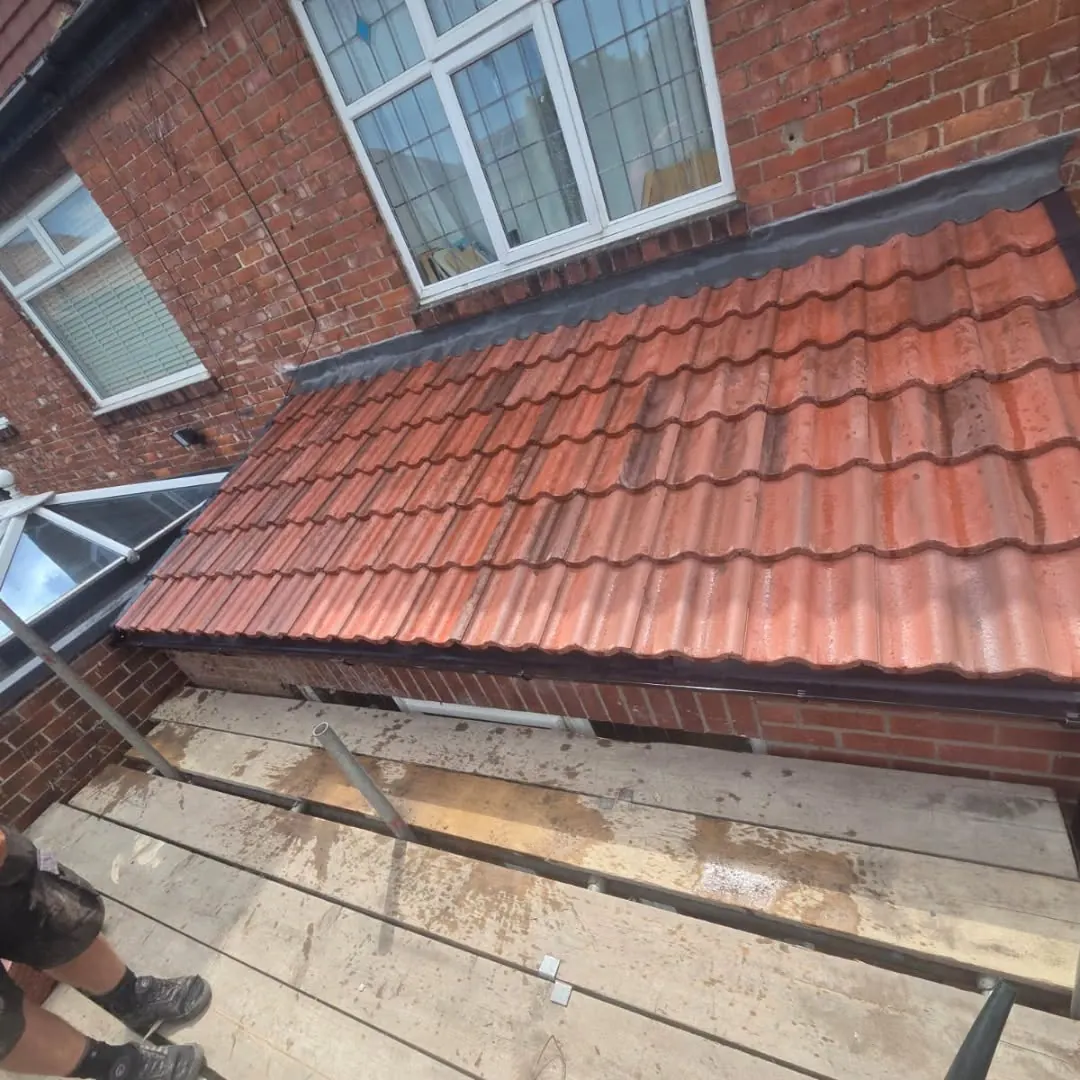
Put a tile designed for a steeper roof onto a shallow one and it may look perfectly sound for a year or two. What it will not do is keep water out reliably, and the failure tends to show up as damp inside long before anything looks wrong outside. This roof needed tiles rated to 12.5°, and that is what went back on.
It is one of the reasons we are wary of a roof that looks fine but keeps leaking. Our guide on why a roof leaks covers the other usual culprits.
What we did
The old covering came off completely, which is the only way to see and correct what is underneath.
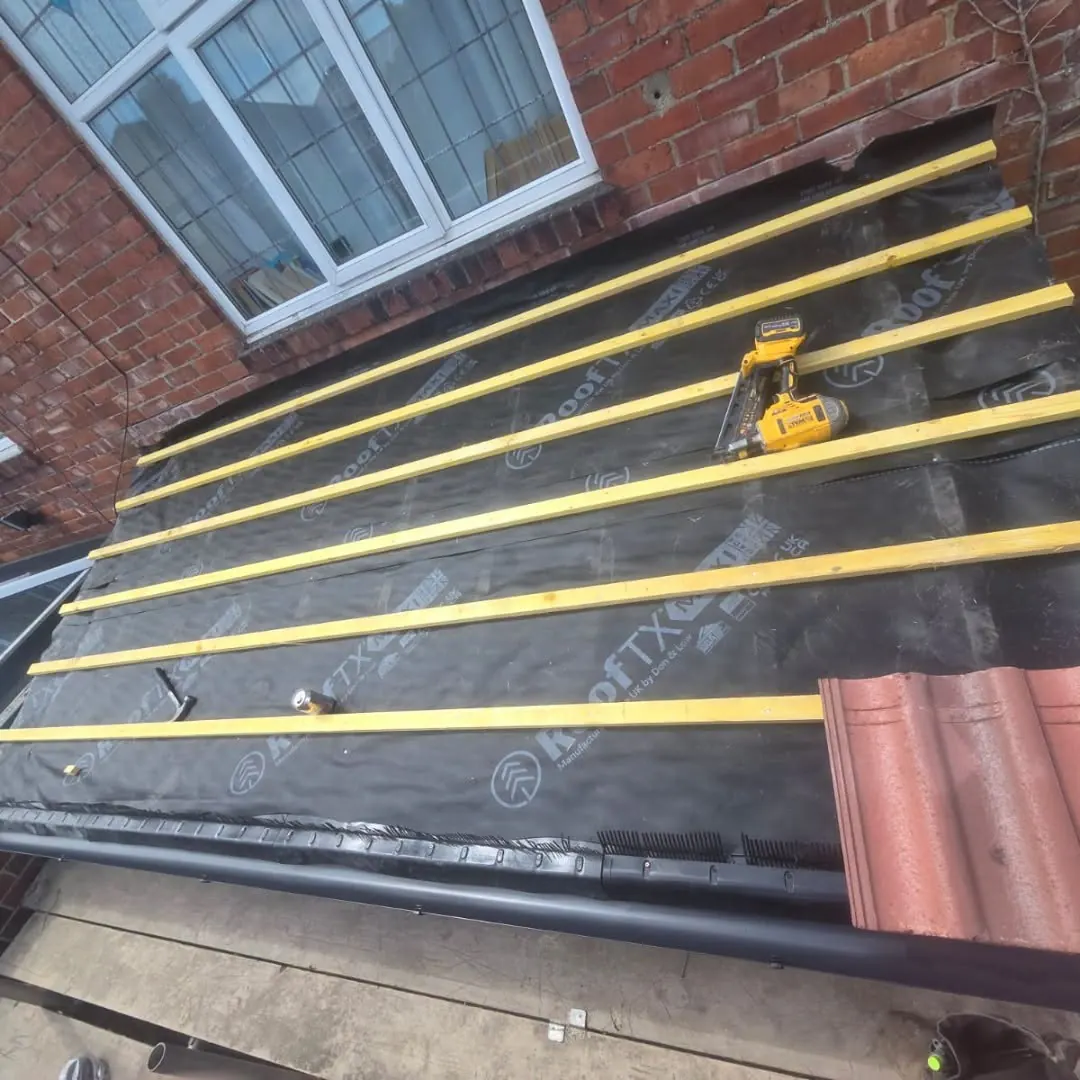
With the roof open, the poorly fixed timbers were put right and levelled before anything went back on. New breathable membrane and treated battens followed, then tiles rated for the pitch, a Manthorpe dry verge system at the edge and Wakaflex flashing where the roof meets the house wall.
Flashing at an abutment like this is one of the most common places for a roof to let water in, so it is worth doing properly rather than sealing over. New black woodgrain fascia and guttering finished it off.
The wider point
A roof that is only a few years old is not automatically a roof that was built correctly. If a relatively young roof is giving trouble, the question worth asking is not only what has failed but whether it was right to begin with.
Our guide on the signs a roof needs replacing explains what to look for, and the difference between an isolated fault and something more fundamental.
We carry out roof replacement, alongside all other roofing work, across Sunderland and the North East.