

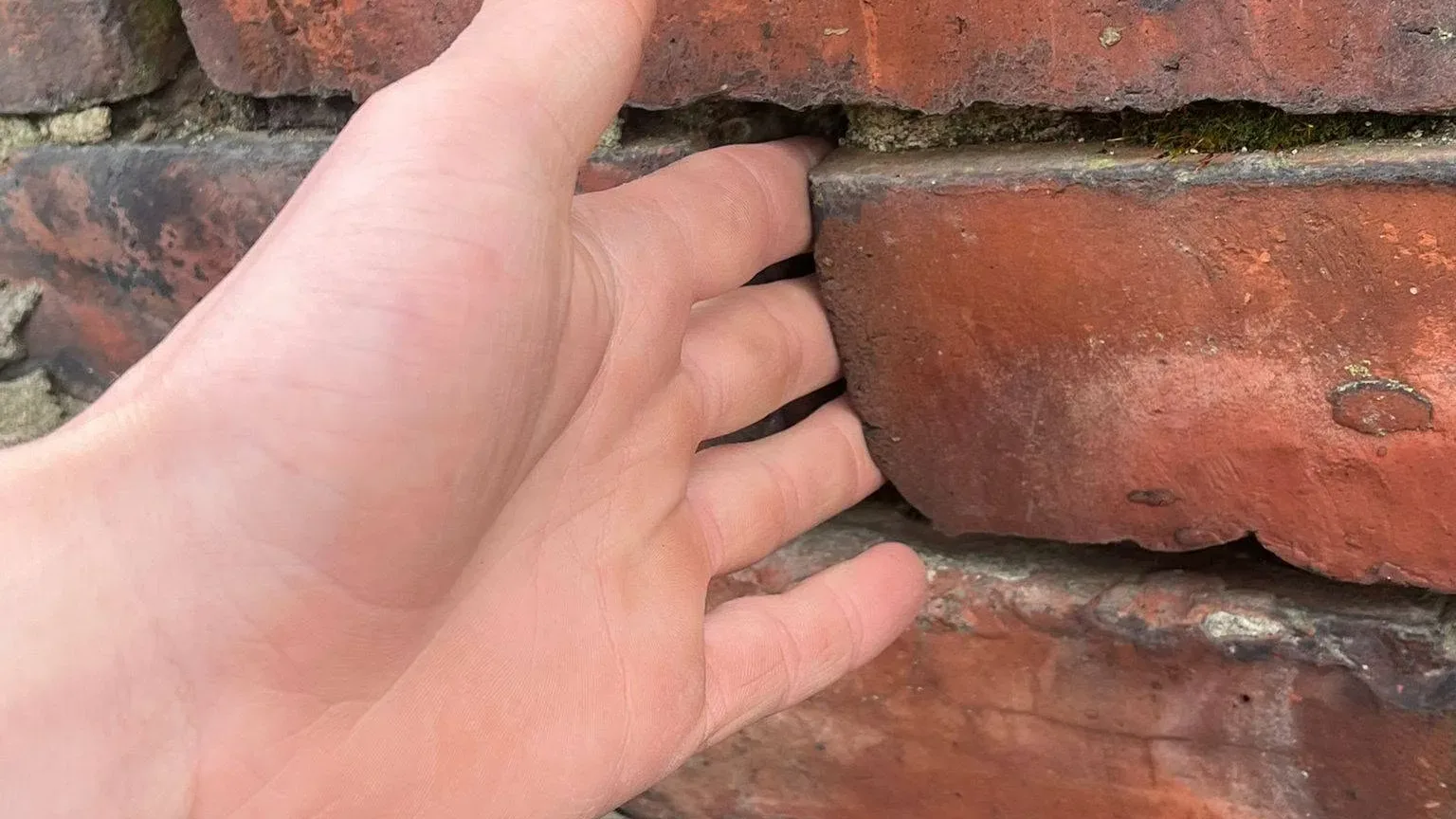
Mortar is meant to be the weakest part of a brick wall. It takes the weather, the movement and the moisture so the bricks do not have to, and over time it wears away. Repointing replaces that worn mortar before the bricks start to suffer.
Done well, repointing protects a wall for decades. Done badly, with the wrong mortar or too little preparation, it can damage the brickwork it was meant to protect. Here is how to tell whether your house needs it, and what a proper job looks like.
What repointing is
Repointing means raking out the old, failed mortar from the joints between the bricks and filling them with new mortar. It is different from rebuilding: the bricks stay where they are, and only the outer depth of the joint is replaced.
It is also not the same as putting a thin skim of new mortar over the old. New pointing needs something solid to grip, so the old mortar has to come out to a proper depth first.
Signs your brickwork needs repointing
Mortar that crumbles or is missing
The simplest test is to run a key or a screwdriver along a joint. If the mortar comes away as sand or crumbs, it has failed. If the joints are visibly recessed, with gaps behind the face of the bricks, water is sitting on the brick edges.
Damp inside on an exposed wall
On older solid-walled houses, damp patches on the inside of a wall that takes the worst of the weather can be a sign that rain is getting in through worn joints. It is worth ruling out other causes such as gutters and downpipes first.
Bricks with faces breaking away
When the face of a brick flakes or crumbles (known as spalling), it is often because water has been getting into the brick and freezing. Sometimes that is caused by old pointing that has failed. Sometimes it is caused by previous repointing in a mortar that was too hard.
Plants growing out of the wall
Moss, weeds or small plants growing from the joints mean there is enough moisture and loose material in there to support them. Their roots then widen the joints further.
Problems on the chimney and garden walls first
Chimney stacks, parapets and garden walls are exposed on both sides and usually show wear first. If those are crumbling, the main walls may not be far behind.
Does the whole house need doing?
Not always. Mortar wears unevenly. The side of the house facing the prevailing weather, areas below leaking gutters and the top of a chimney stack usually go first, while sheltered walls can be fine for years longer.
Heritage guidance generally recommends only repointing where the mortar has actually failed, rather than raking out sound mortar for the sake of it. A good bricklayer will tell you which walls need doing now and which can wait.
Why the type of mortar matters
This is the part that is most often got wrong.
Houses built before around 1919 were usually built with soft bricks in lime mortar. Lime mortar is flexible and lets moisture in the wall evaporate out through the joints. Many of the older terraces and villas around Sunderland and the North East were built this way.
If those walls are repointed with a hard, modern cement mortar, the moisture can no longer escape through the joints. It comes out through the bricks instead, and the faces of the bricks start to break away while the new pointing stays intact. The repair ends up damaging the wall.
The general rule is that the mortar should be weaker and more breathable than the bricks around it. For older brickwork that usually means a lime-based mortar. For modern houses built with harder bricks and cement mortar, a suitable cement mortar is normally fine.
Historic England’s guidance on repointing brick and stone walls goes into this in detail if you have an older or listed property.
What a proper repointing job involves
- Assessment. Checking which areas have failed, what the original mortar is, and whether there are other problems such as cracks, loose bricks or leaking gutters to sort out first.
- Raking out. Removing the old mortar to a consistent depth. A common rule of thumb is at least twice the width of the joint, so a 10mm joint is raked out to around 20mm. Care is needed not to damage the edges of the bricks.
- Cleaning and dampening. Clearing dust and debris from the joints and dampening the brickwork so it does not draw the water out of the new mortar too quickly.
- Pointing. Pressing the new mortar firmly into the joints, matched in colour and finish to the original as closely as possible.
- Finishing and curing. Shaping the joints to the right profile and protecting the work from sun, rain and frost while it sets.
Repointing is best done outside the coldest months, as frost can damage mortar before it has cured.
Signs of a poor repointing job
- New mortar smeared over the faces of the bricks
- Joints that are visibly wider than the originals, because the brick edges were cut away
- Pointing that stands proud of the brick face and catches the rain
- A colour that stands out clearly from the original
- New pointing that cracks or falls out within a few years, usually because it was not raked out deeply enough
Repointing and damp
Repointing can solve damp caused by rain getting through worn joints, but it will not fix damp caused by something else. Overflowing gutters, a leaking downpipe, failed flashing or a chimney problem can all soak a wall from above. Our guide on how to tell if your lead flashing needs replacing covers one of the most common sources of water around chimneys.
It is worth checking those first, because new pointing on a wall that is still being soaked will not last as long as it should.
Getting your brickwork checked
Forthcoming Group carries out repointing and brickwork repairs across Sunderland and the North East, including chimney repointing and bracing. We look at the condition of the brickwork and the existing mortar, explain what needs doing and give you a written quote.