
Flat Roof Repairs and Replacement Sunderland
Felt, EPDM rubber and fibreglass flat roofs repaired and replaced properly. Forthcoming Group checks the deck as well as the covering, because on a flat roof the problem is usually underneath what you can see.
- Over 500 Projects Completed Across the North East
- Decades Of Trade Experience Experienced multi-trade team
- Free Roof Inspections No obligation, written quote
- 5 Star Customer Reviews Rated by local customers
Flat Roofing Specialists
A flat roof is never actually flat
Every flat roof is built with a slight fall, so that water runs towards an outlet rather than staying put. Almost everything that goes wrong with a flat roof comes back to that fall being lost.
The deck sags, softens or takes on water. Water then collects in the dip rather than draining, which adds weight to the part of the roof that is already low, which deepens the dip. It is a problem that compounds, and it does it slowly enough that nobody notices until there is a stain on a ceiling.
Which is why we look at the timber and the drainage before talking about coverings. A new membrane laid over a deck that has lost its fall will pond from the day it is finished.
Our guide on why a roof leaks covers flat roofs alongside the usual pitched roof causes.


What We Do
Flat roofing work we carry out
Garage roofs, extension roofs, dormer tops and porches. Most domestic flat roofs are small, and most of them have been left longer than they should have been because nothing is visible from the ground.
Our flat roofing work covers:
- Felt flat roof repairs and patching
- Full re-felting of flat roofs
- EPDM rubber flat roof installation
- GRP fibreglass flat roofs
- New OSB decking where the deck has failed
- Upstands, flashings and wall junctions
- Outlet and drainage corrections
- Garage, shed, extension and dormer roofs
We also carry out roof repairs and full roof replacements on pitched roofs, so a property with both is handled by the same team.
When to Act
Signs your flat roof needs attention
Flat roofs give more warning than pitched roofs do, because you can usually see the surface. The difficulty is that the warnings look harmless. Standing water is not a leak, and a blister is not a hole, so both tend to get left.
Worth getting looked at:
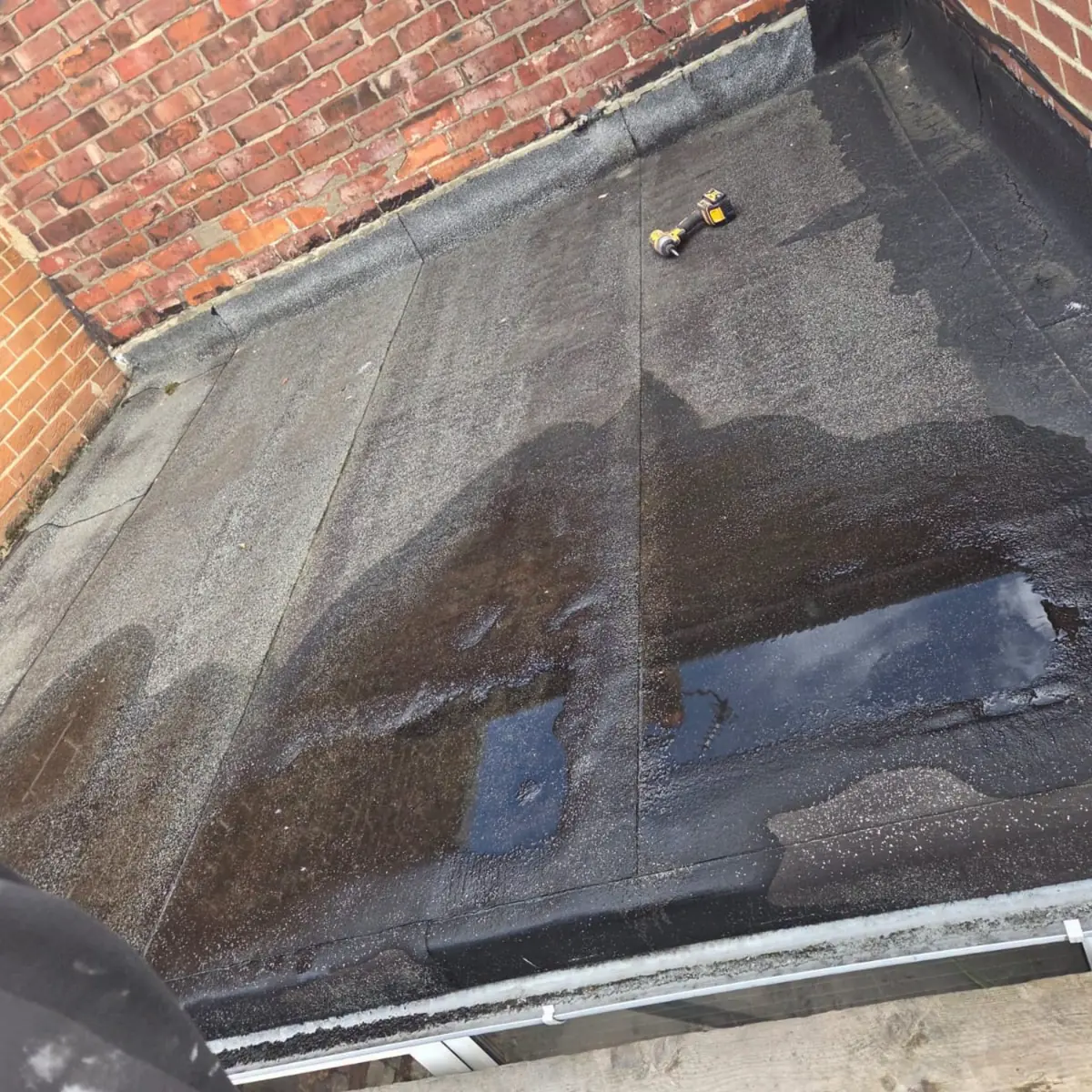
- Water still sitting on the roof days after rain
- Blisters or bubbles across the covering
- Splits or open seams, particularly at the edges
- A spongy feel underfoot when the roof is walked on
- Damp or staining on the ceiling below
- Felt lifting away from the wall or upstand
Sponginess underfoot is the one worth acting on quickest. It points at the deck rather than the covering, which means water has already been getting into the timber. See a felt roof we replaced after water was sitting on it.
Felt, Rubber or Fibreglass
Choosing a flat roof covering
Felt is the traditional option and still the cheapest. Modern torch-on felt is a long way from the material that gave felt roofs their reputation, and a well-laid felt roof will typically give ten to twenty years. Its weakness is seams, which is where most felt roofs eventually fail.
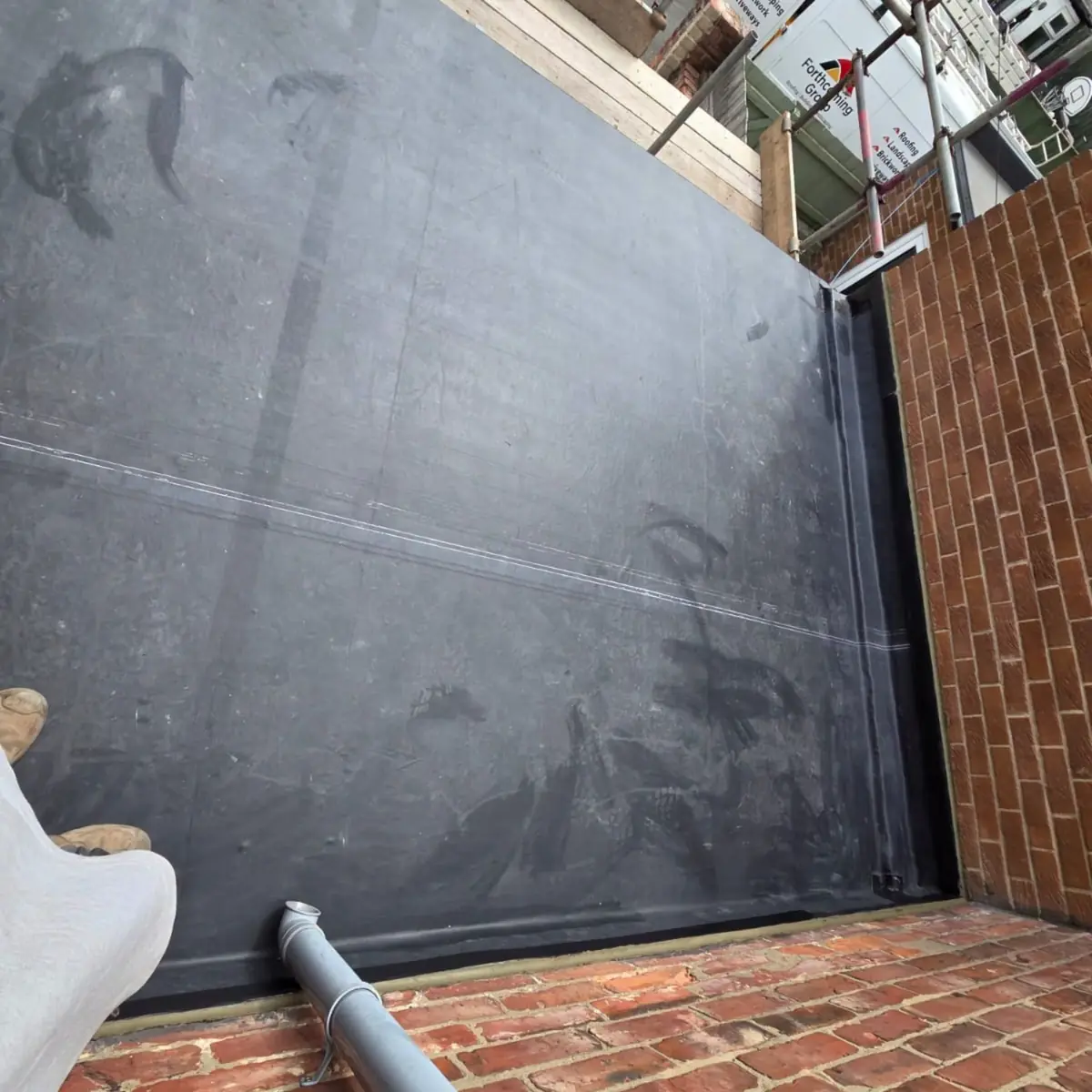
EPDM rubber is laid as one sheet. On a domestic roof that usually means no seams at all, including where the roof meets a wall, because the upstand is formed from the same piece of material rather than joined to it. It stays flexible instead of going brittle and commonly lasts around thirty years.
GRP fibreglass is laid wet and cures into a hard, seamless shell. It takes foot traffic better than the other two, which makes it worth considering on a balcony or a roof that gets used, but it needs dry weather to install and is less forgiving of movement in the deck.
Whichever goes on, the junctions decide how long it lasts. Upstands at walls, outlets and edges are where flat roofs leak, and detailing them properly matters more than the brand on the membrane.
What Sets Us Apart
Why choose Forthcoming Group
We check the deck, not just the covering
Most flat roof failures start underneath. A sound-looking membrane over a soft deck will not last, so we establish what the timber is doing before quoting.
The right covering for the roof
Felt, EPDM and fibreglass each suit different roofs, budgets and lifespans. We explain the trade-offs rather than fitting whatever we happen to carry.
Work done once, properly
Upstands formed from the same sheet, outlets left draining and junctions detailed correctly, so you are not paying for the same roof twice.
Respect for your property
We work carefully around your home, leave the site tidy and keep disruption to a minimum, however small the job.
Our Process
How a flat roof job is handled
The decision that matters on a flat roof is made before anything is ordered: whether the deck can stay. Working to a clear process means that question gets answered honestly, and you know what you are paying for before work starts.
-
 Step 1
Tell us what you have noticed
Standing water, a blister, a stain on the ceiling below. Anything you can tell us about when it appears narrows it down.
-
 Step 2
We inspect the covering and the deck
We look at the condition of the membrane, where water is collecting and whether the timber underneath is still sound.
-
 Step 3
You get a written quote
Whether a repair is worth doing, what recovering would cost, and which covering we would recommend and why.
-
 Step 4
The roof is stripped and recovered
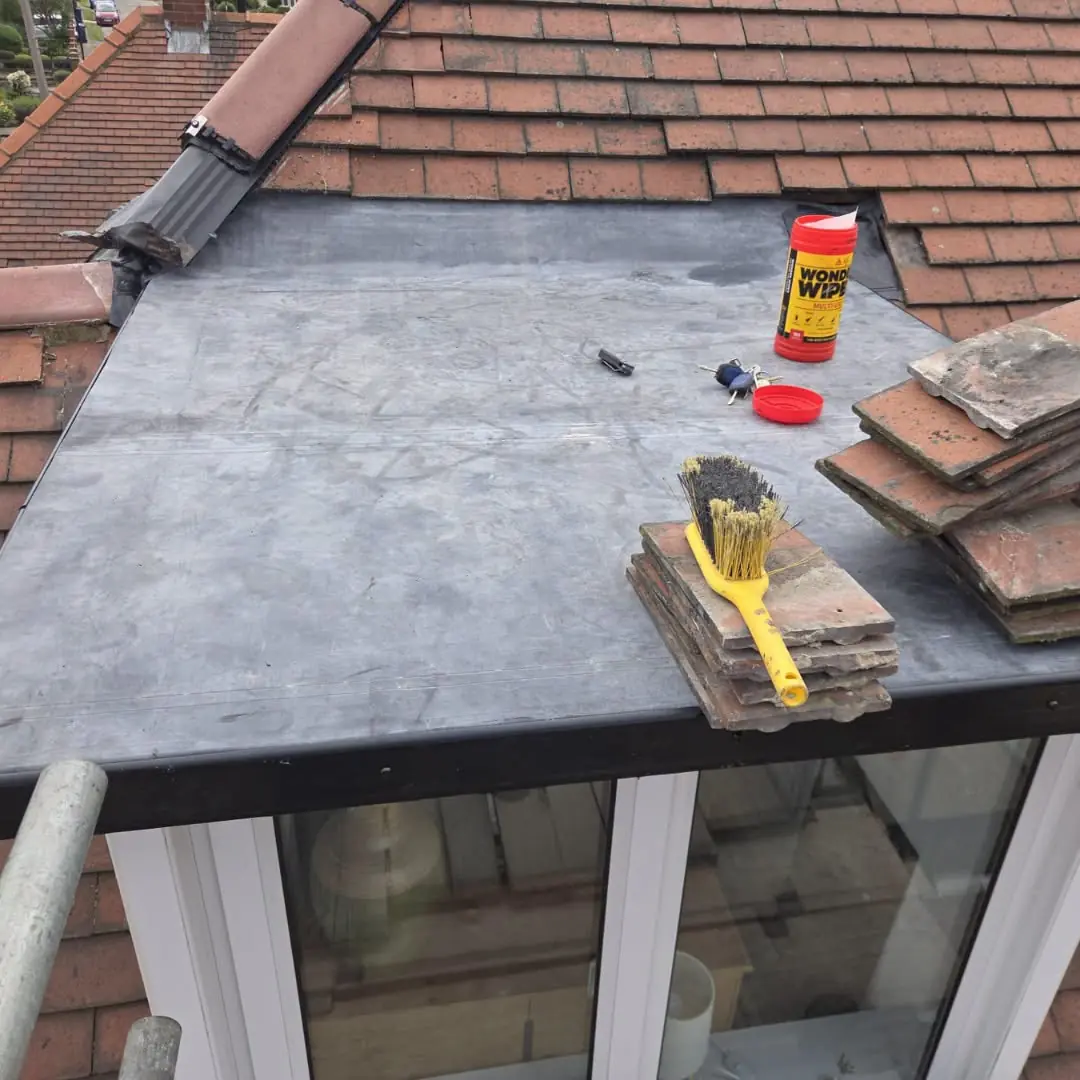
Old covering off, new decking where it is needed, then the new membrane laid and dressed up the surrounding walls.
Flat Roof Costs
What drives the price
Flat roofs are priced by area, but area is rarely what makes two quotes differ. Four other things do.
Whether the deck stays. New boards across the whole roof is a different job to recovering sound timber, and it is the single biggest swing in a flat roof price.
The covering. Felt is the cheapest to fit, EPDM costs more up front and lasts roughly twice as long, fibreglass sits between the two.
Access. A garage roof reached from a ladder and a second-floor dormer needing scaffolding are not comparable, whatever the square metres say.
The junctions. A simple rectangle is quick. A roof with three walls, a door threshold and a pipe through it takes longer, because each of those is a detail that has to be formed properly.
We measure the roof, tell you whether the deck can stay and quote in writing, so you are comparing like for like against anything else you have been given.

Customer Reviews
Trusted for flat roofing in Sunderland
Rated 4.7 out of 5 from 68 Google reviews
Customer feedback and reviews are displayed across the website through our verified review platforms.
Ruth
North Tyneside
Carol
Sunderland
Samuel
County Durham
What To Avoid
Flat roof work that does not last
Flat roofs attract cheap fixes more than any other kind of roof, because the surface is easy to reach and easy to paint.
The trouble is that almost every cheap fix treats the covering, and on a flat roof the covering is usually the symptom. The fall, the deck and the junctions are the job.
A roof that has been coated two or three times is often harder and more expensive to put right than one that was simply left alone.
Liquid coatings over a wet roof
Painting a sealant over a roof that has already taken on water traps the moisture in the deck, where it carries on rotting the timber out of sight.
Patching a roof that ponds
If water is standing, the problem is the fall rather than the covering. You can repair a membrane but you cannot repair the shape of a roof without touching the deck.
New covering over old decking
A new membrane takes the shape of whatever it is laid on. Over a sagging deck it ponds from the day it is finished.
Joining an upstand rather than forming it
Where a flat roof meets a wall is the single most common place for water to get in. Forming that detail from the same sheet removes the seam entirely.
Recent Work
Flat roofs we have replaced
Every project page shows what we found, what we did about it and how it finished, with photographs from the job rather than stock images.
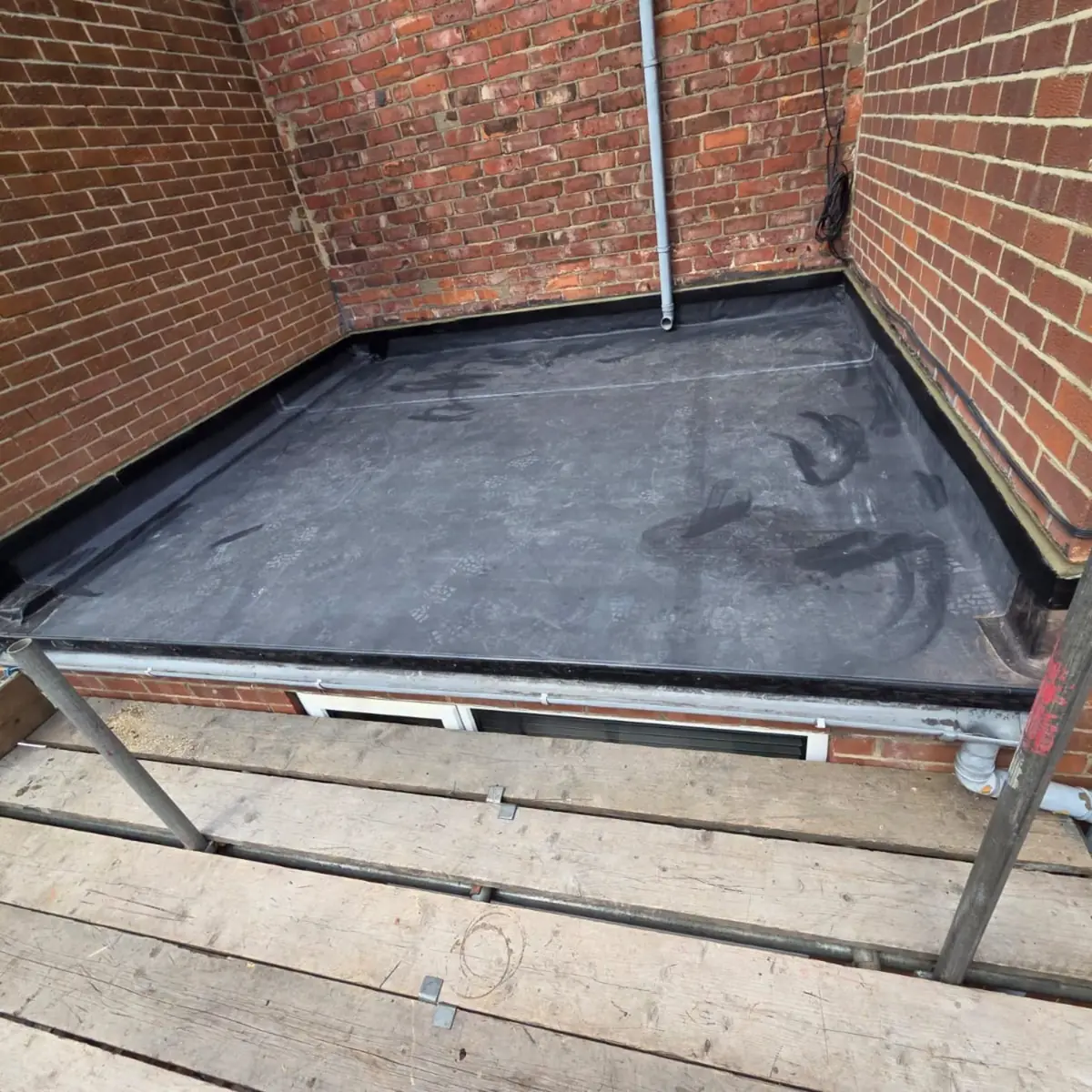
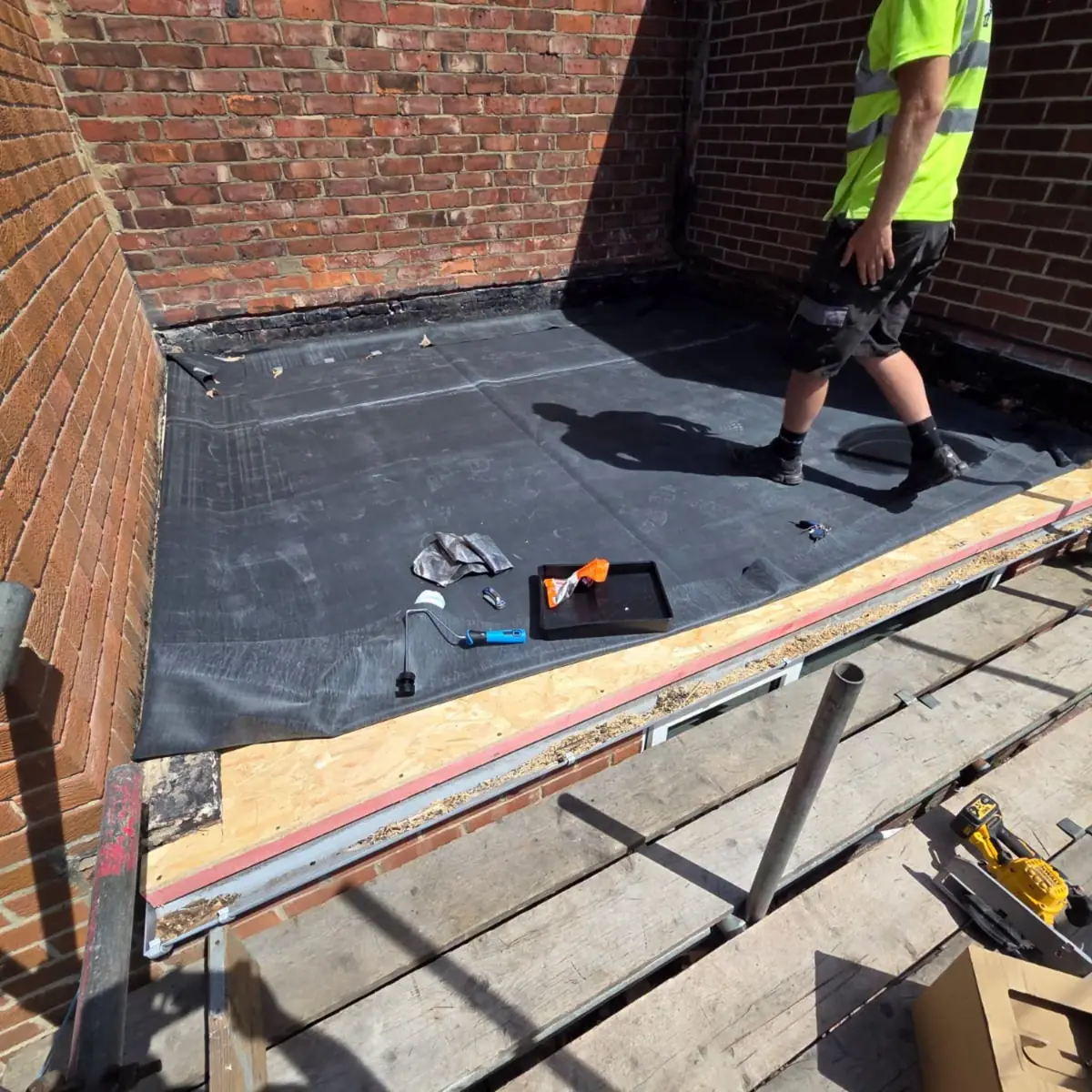
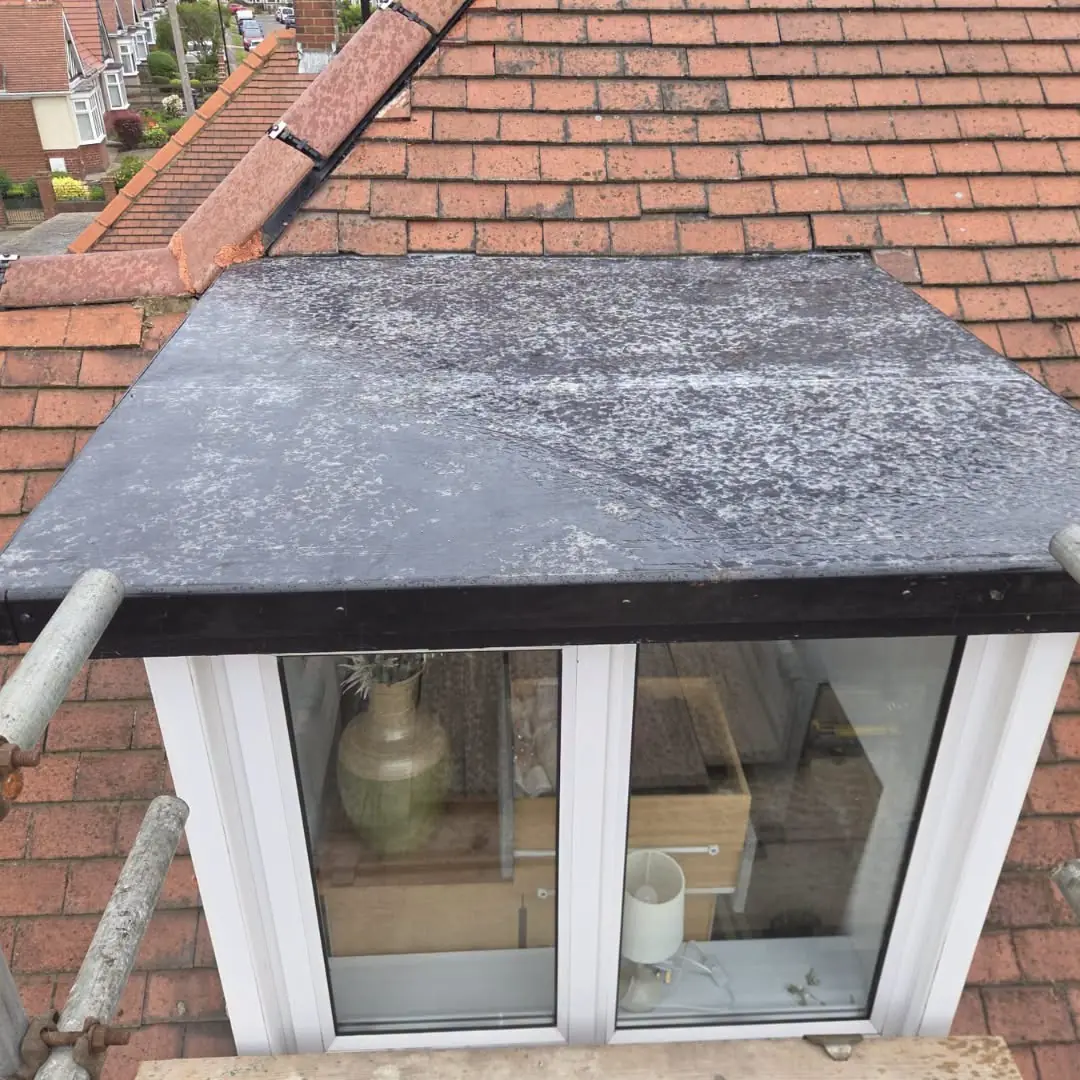
A felt flat roof holding standing water, stripped back to new OSB decking and recovered in EPDM rubber with the upstands dressed in one piece.
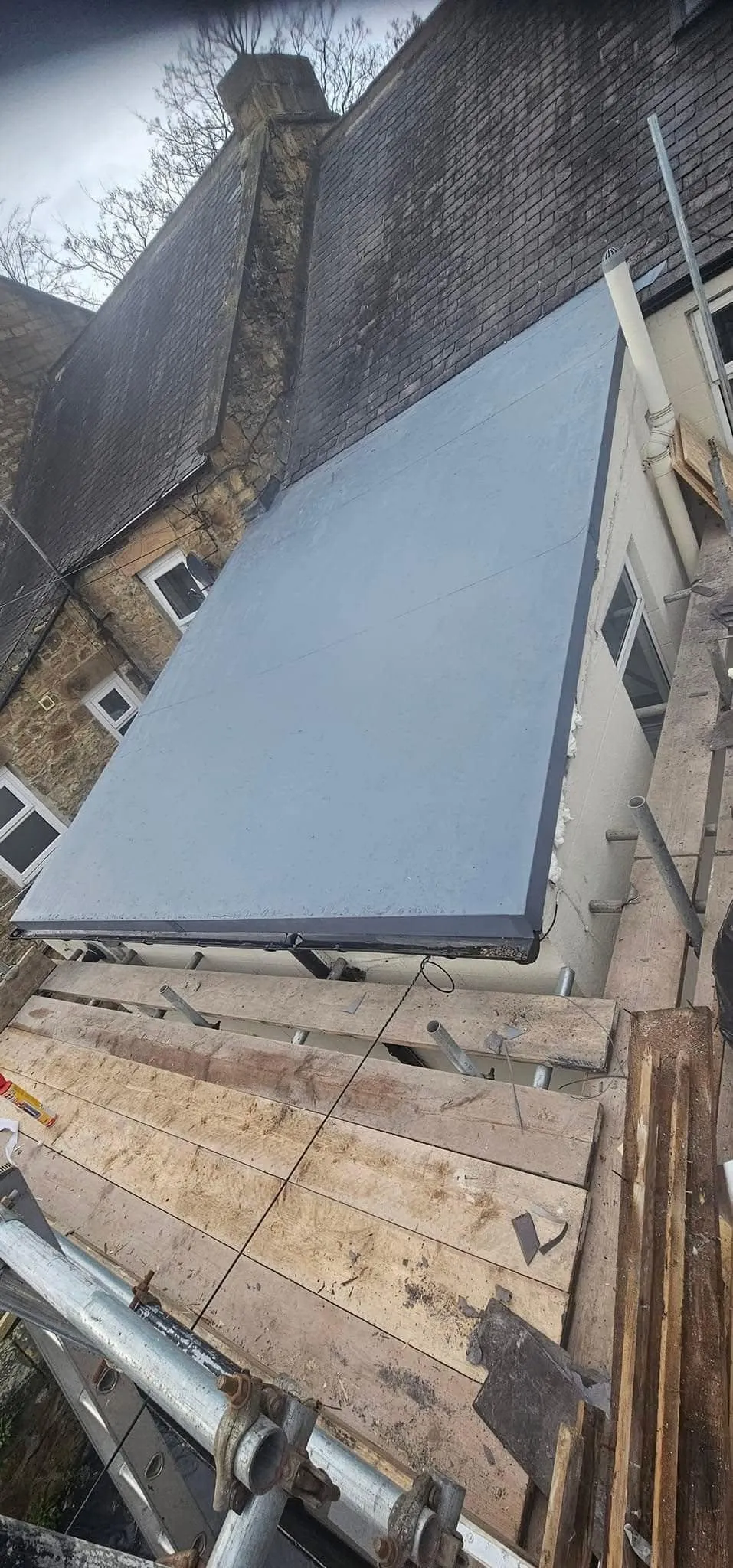
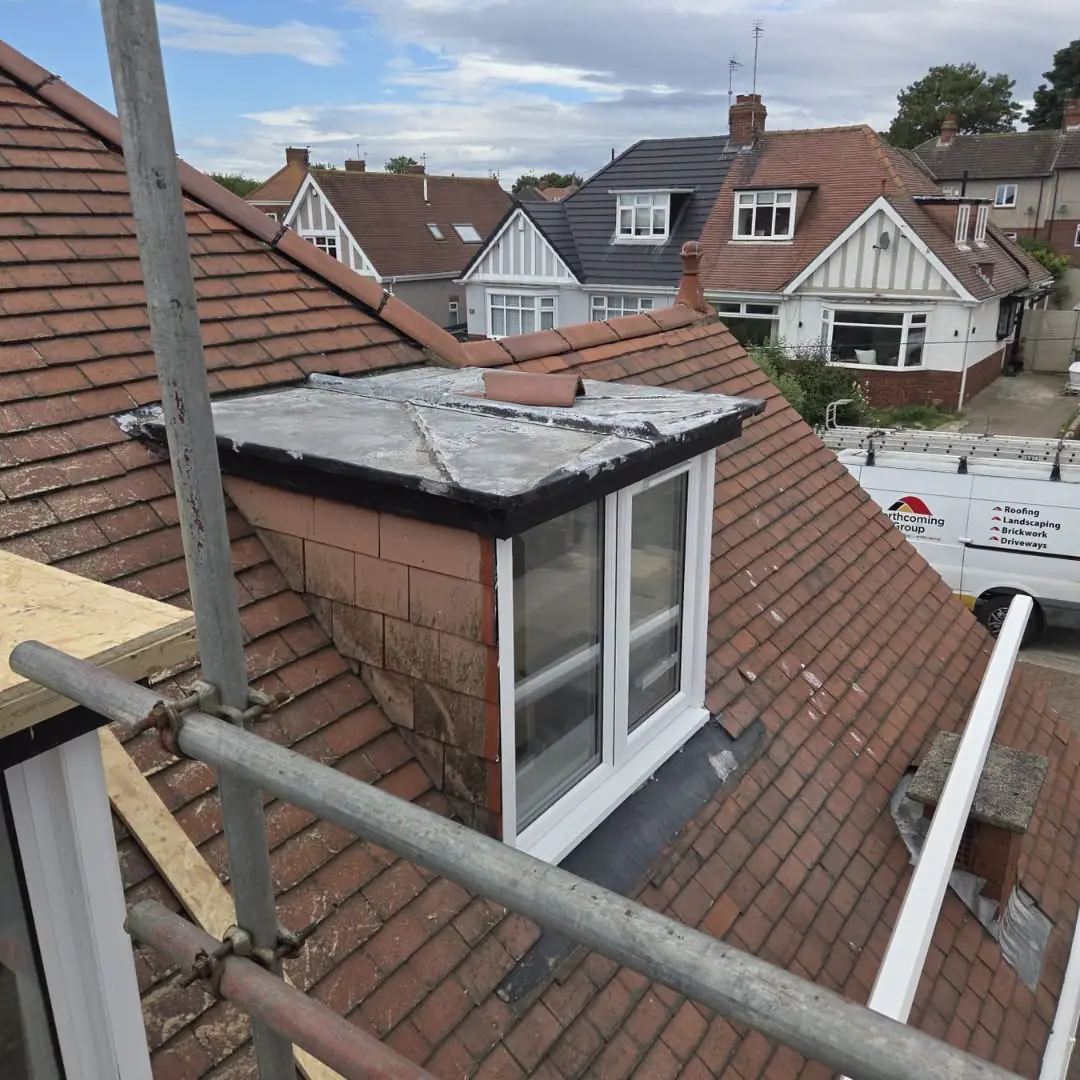
An old dormer flat roof replaced in EPDM, with new 18mm OSB decking across the whole dormer top.
Areas Covered
Flat roofing across Sunderland and the North East
Our roofing team repairs and replaces felt, EPDM and fibreglass flat roofs for homeowners throughout Sunderland and the surrounding areas.
- Sunderland
- Newcastle
- Gosforth
- Darras Hall
- Whitley Bay
- North Tyneside
- South Tyneside
- Northumberland
- Durham
- County Durham
- Darlington
- Hartlepool
- Middlesbrough
FAQs
Questions about flat roofs
How long does a flat roof last?
It depends on the covering. Traditional felt typically gives around ten to twenty years. EPDM rubber stays flexible rather than going brittle and commonly lasts around thirty. GRP fibreglass sits somewhere between the two. In practice the deck underneath often decides the real lifespan, because a membrane laid on sound timber with a proper fall outlasts the same membrane laid on a deck that has started to sag.
Can a flat roof be repaired, or does it need replacing?
A single split or a lifted seam on an otherwise sound roof is usually worth repairing. Replacement tends to be the better answer once the covering has blistered or weathered across the whole surface, once water is standing on it, or once the deck has softened. We will tell you which of those you are dealing with before quoting.
Is EPDM better than felt?
For most domestic flat roofs, yes. EPDM is laid as a single sheet so there are far fewer seams to fail, it stays flexible in cold weather rather than cracking, and it typically lasts around thirty years against ten to twenty for felt. Felt still has its place, particularly on smaller roofs and where budget is the deciding factor, and a well-laid felt roof will outlast a badly laid rubber one.
Why is water sitting on my flat roof?
A flat roof is never truly flat. It is built with a slight fall so water runs to an outlet. Water that is still there days after rain means that fall has been lost, usually because the deck has sagged, softened or taken on water itself. A puddle an hour after heavy rain is normal. A puddle three days later is worth looking at.
Do you replace the decking?
Where it needs it, yes. We fit new OSB decking when the existing boards have softened or lost their fall. That is the part of the job that actually restores drainage, and it is why recovering a roof without touching a failed deck rarely holds for long.
Can you re-roof a garage or shed?
Yes. Garage roofs, shed roofs, extension roofs and dormer tops are some of the most common flat roofing work we do. They are usually straightforward jobs, and they are often the roofs that have been left longest.
Can a flat roof be walked on?
Occasional access for maintenance is fine on a sound roof. Regular foot traffic needs to be designed in, with a walkway or a protective layer, so tell us when we quote if the roof is going to be used rather than just maintained.
Which areas do you cover?
We carry out flat roofing work across Sunderland and the wider North East, including Newcastle, Durham, Northumberland and surrounding areas.

Free Guide
Avoid costly mistakes before starting your project
A new roof, driveway, garden transformation or property upgrade is a big investment. Choosing the wrong company can lead to unexpected costs, delays and problems that could have been avoided.
Our free guide explains what to check, which questions to ask and what to consider before making your decision.
Get in Touch
Need a flat roof repaired or replaced?
Roof inspections are free and carry no obligation. We will tell you whether the deck can stay, which covering suits the roof and what it will cost in writing.