The problem
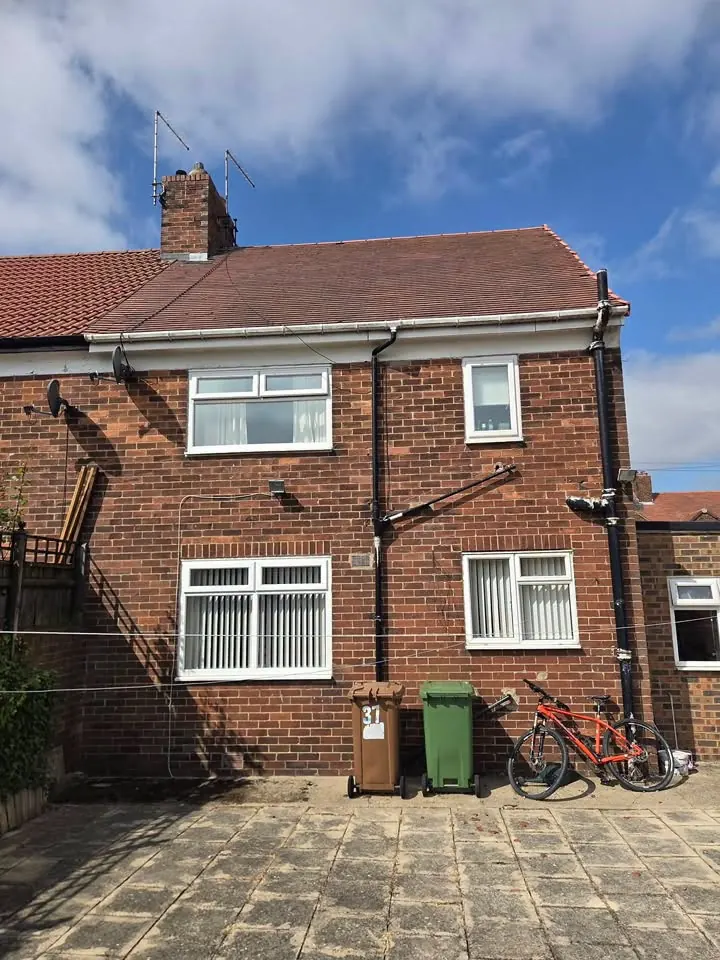
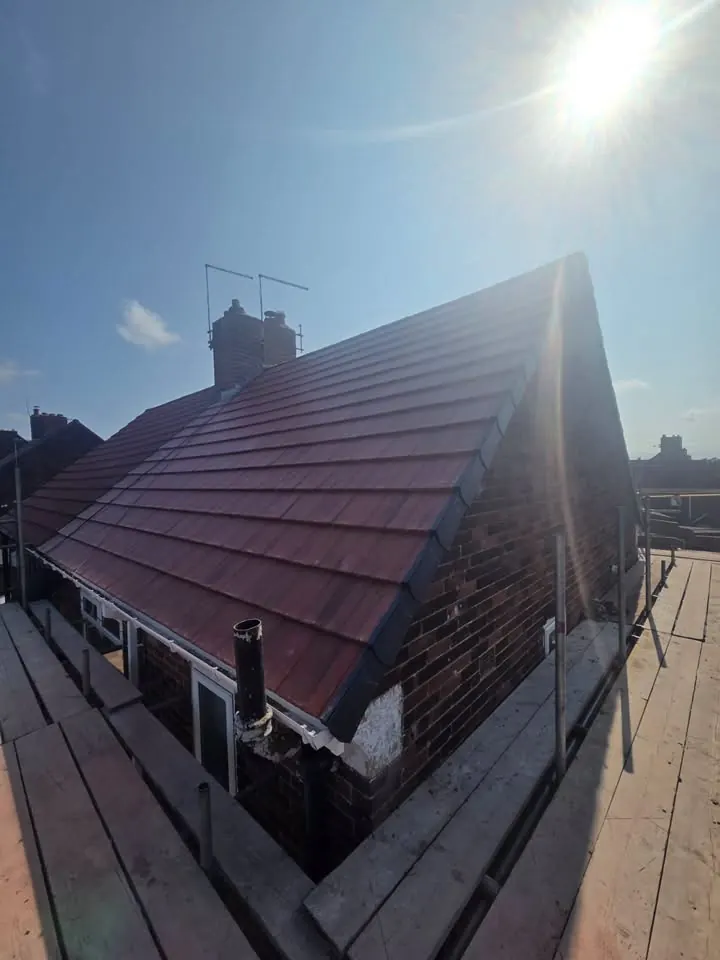
The roof on this Silksworth semi had reached the end of its service life. The covering was weathered throughout rather than damaged in one spot, the roofline needed attention, and the pointing on the chimney had broken down.
With a roof at that stage there is rarely much value in patching. Repairs on a covering that is failing generally buy a season or two, and each visit pays for access all over again. Our guide on the signs a roof needs replacing sets out how to tell which side of that line a roof falls on.
What we did
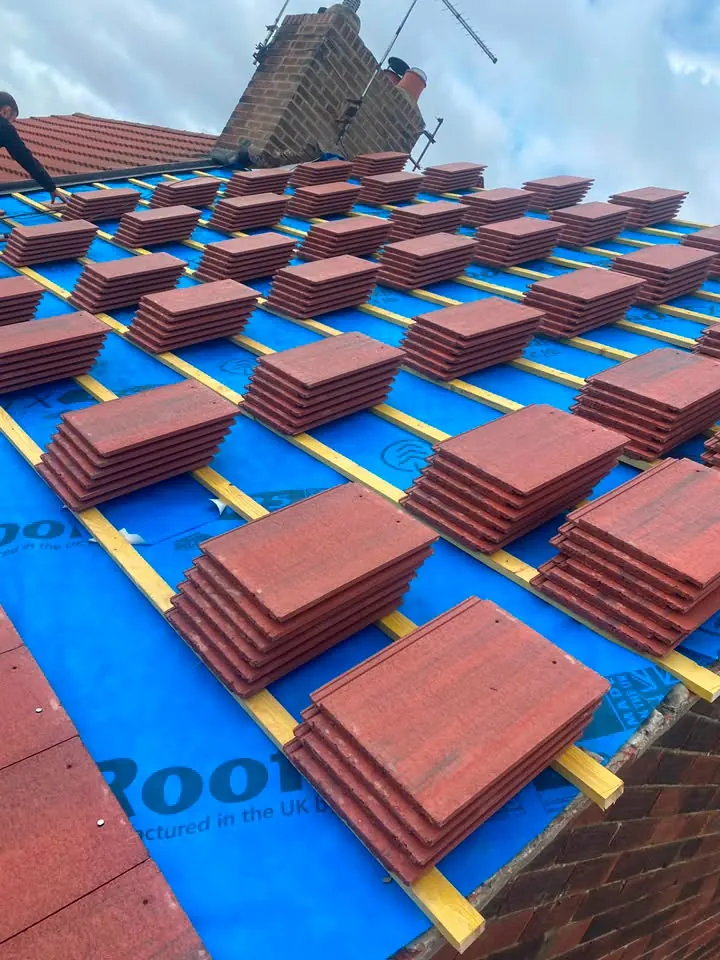
The roof was stripped back rather than covered over. That distinction matters more than anything else on a job like this, because on a roof of this age the underlay has usually perished long before the tiles look past it. Re-covering without replacing it puts a new roof over a failed waterproof layer.
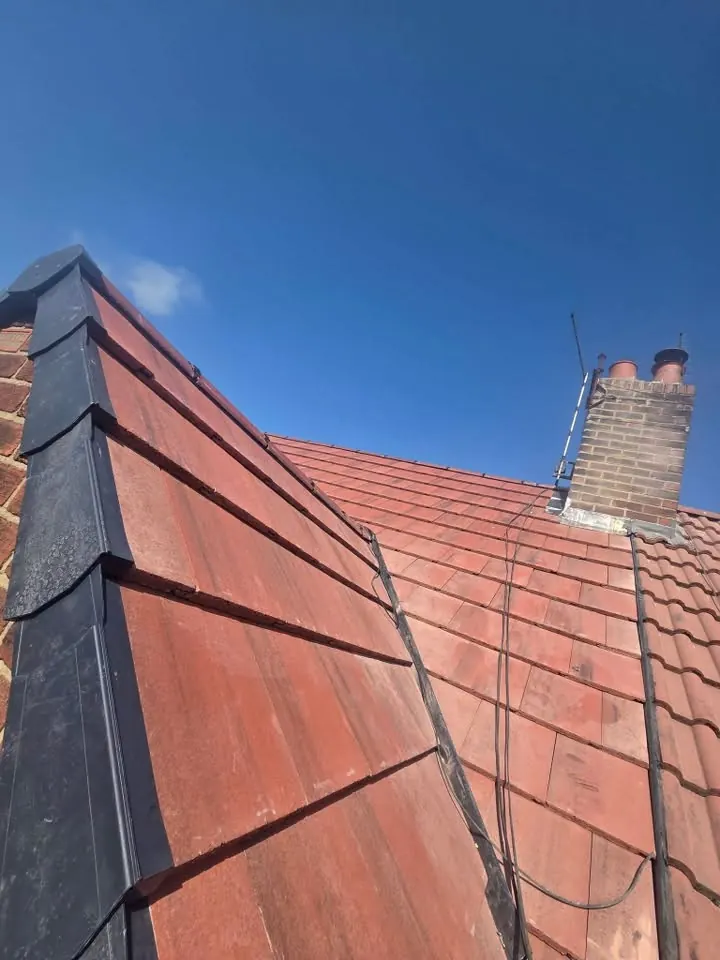
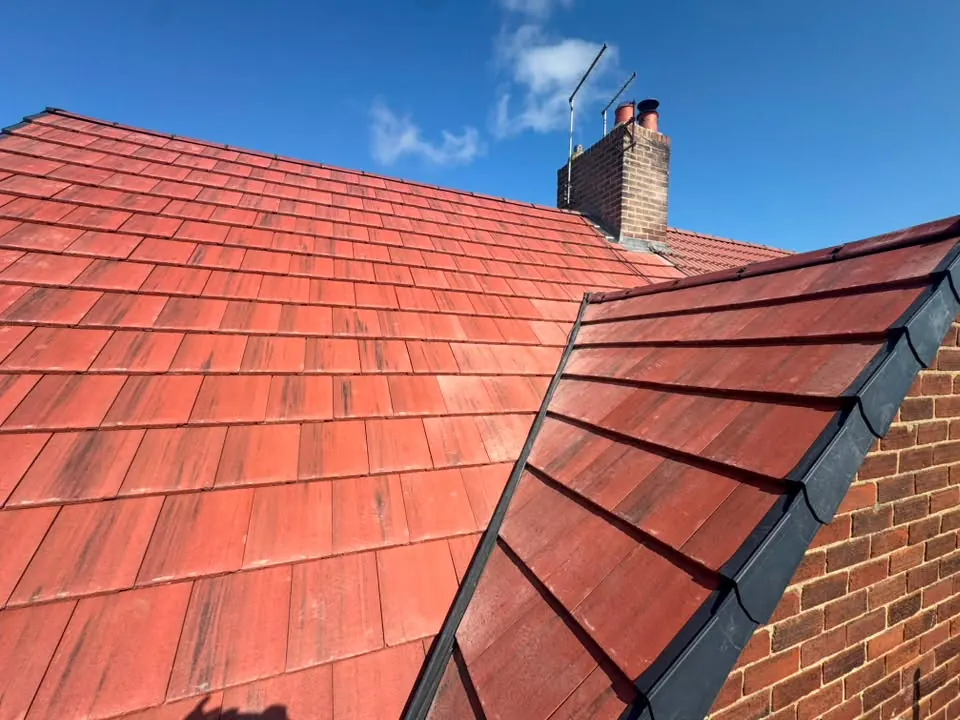
New breathable membrane and new treated battens went on before a single tile, and the gable edges were finished with a dry verge system instead of sand and cement. Mortar verges crack, let go in high winds and need repointing periodically. A dry verge is mechanically fixed and does not.
A failed verge or a perished membrane is behind a good proportion of the leaks we are called to, which we cover in why a roof leaks.
The chimney and guttering were dealt with in the same visit. Scaffolding is one of the biggest single costs in any roofing job and it was already up, so returning later to repoint a chimney or change guttering would have meant paying for that access twice.
The part the photographs miss
This was an elderly homeowner’s house, and her family’s worry was less about tiles and more about what several days of scaffolding and a working team would be like for her.
Having a larger roofing team than most means a full replacement can usually be completed quickly, and on an occupied home that counts for more than it does on an empty one.
We carry out roofing work of this kind across Sunderland and the North East.