

Spray foam insulation was sold to a great many homeowners as a straightforward way to make a house warmer. For a sizeable number of them it has turned into something else entirely: a survey that flags a defect, a lender that will not lend, and a sale that stalls.
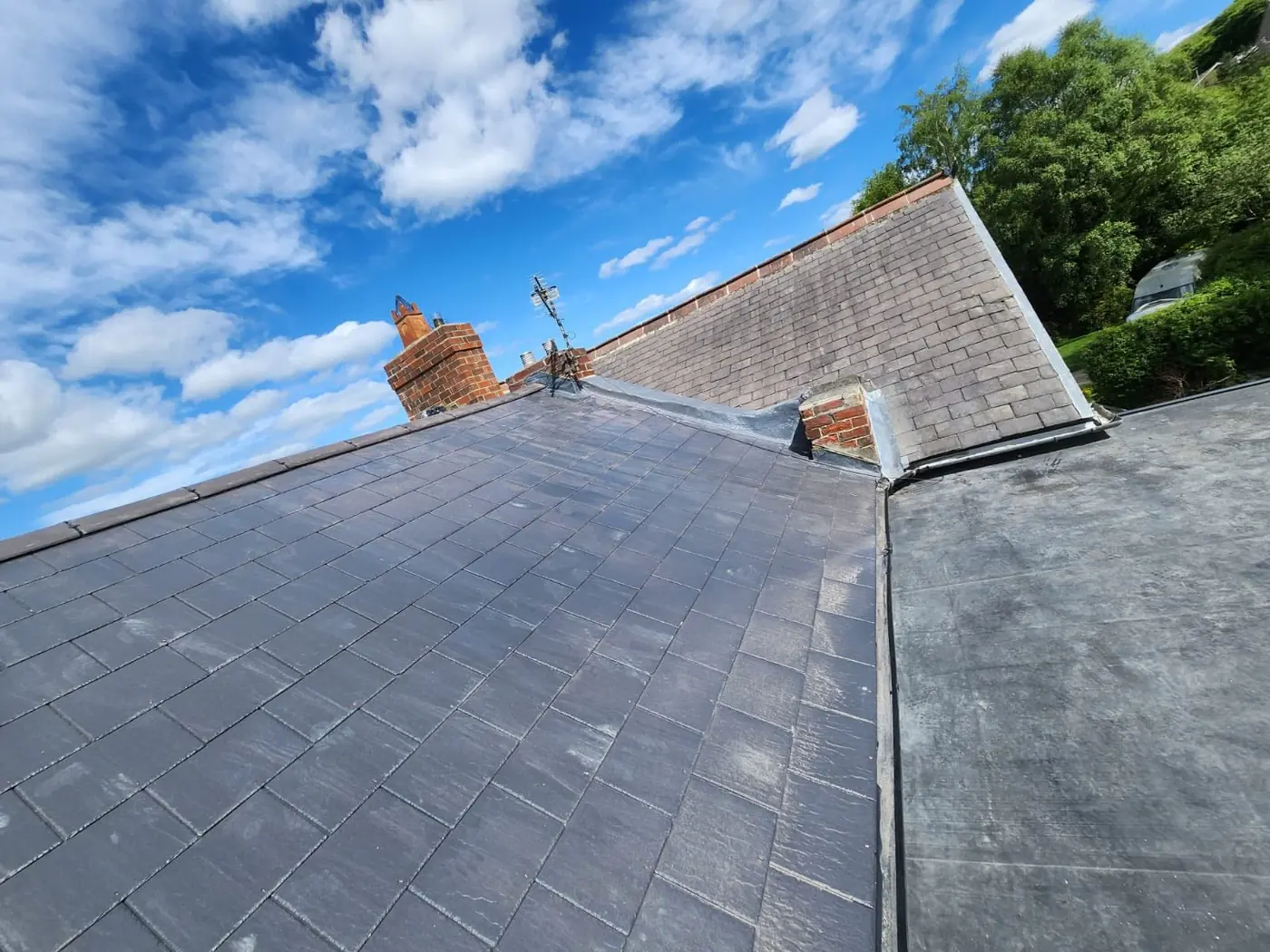
We recently completed a full roof replacement where the timbers had to be strengthened under the guidance of a structural engineer, because the roof structure had been compromised by spray foam. That is the serious end of it, and it is not the only case we have seen.
This guide explains what the actual problem is, what the official guidance says rather than what either the installers or the removal companies say, and what to do if you already have it.
Key Takeaways
- The main problem is not insulation performance but that foam hides the roof timbers from inspection
- Some installations also trap moisture against the timbers, which can cause rot in the structure holding your roof up
- Many lenders now decline properties with spray foam in the roof, or require removal and a clean report before lending
- Inspections by the Property Care Association and HomeOwners Alliance found defects in around a third of properties checked, so most had none
- Whatever the condition, the inspection problem remains, and that is what usually stops a sale
- Get an opinion from someone who is not selling you either the foam or its removal
What Spray Foam Actually Is
Two different products get called the same thing, and the distinction matters.
Open-cell foam is softer and more breathable. It allows some moisture movement, though it still conceals the timbers behind it.
Closed-cell foam is rigid and effectively impermeable. It sticks hard to whatever it is sprayed onto and does not let moisture pass through it.
Both are usually applied to the underside of the roof, directly onto the felt and rafters. That location is the root of everything that follows.
Problem One: Nobody Can See the Timbers
This is the issue that affects almost every property with spray foam, regardless of whether anything has actually gone wrong.
A roof is held up by timber. Any survey worth having includes an assessment of the condition of that timber. Once foam has been sprayed over the rafters, a surveyor cannot see them, cannot assess them and will not certify them.
Faced with that, a surveyor does the only responsible thing and flags it. They are not saying the roof is rotten. They are saying they cannot tell, and a lender treats “cannot tell” much the same way as “possibly bad”.
Problem Two: Trapped Moisture
Roof spaces need to breathe. Warm, moist air rises from the house into the loft, and a conventional roof lets that moisture escape through ventilation at the eaves and through the covering.
Closed-cell foam sprayed onto the underside of the roof can interrupt that. Moisture that would have dispersed instead sits against timber, held there by a material it cannot pass through. Timber that stays damp, over years, rots.
Where this has happened, the damage is hidden by the very thing that caused it, which is why it so often comes to light only when the foam is removed.
What the Official Guidance Says
This is worth separating from the noise, because there is a great deal of marketing on both sides.
RICS has published a consumer guide on spray foam insulation. Its central advice is to get independent expertise that is commercially separate from the installer and the manufacturer before making decisions.
The Property Care Association published an inspection protocol in March 2023 to help surveyors assess spray foam in pitched roofs consistently, and has since issued consumer guidance.
On the scale of actual damage, the PCA and the HomeOwners Alliance reported to government in May 2025 that around 35 per cent of properties inspected had one or more defect resulting from spray foam insulation, based on inspections at more than 500 properties.
That figure cuts both ways, and it is worth being straight about it. A third is a lot. It also means roughly two-thirds of inspected installations had no defect at all. Spray foam is not an automatic catastrophe, and anyone telling you it is may be selling removal.
What it does do, in almost every case, is create the inspection problem above.
The Mortgage Problem
The lending consequences are well documented and the House of Commons Library has published a briefing on them.
In practice, a lender will usually do one of three things: decline outright, require removal with a satisfactory report before lending, or instruct a further specialist inspection. Policies vary between lenders and change, so the position for any particular property depends on the lender involved.
You may see very precise figures quoted, such as the proportion of lenders refusing or the number of unmortgageable homes in the UK. Treat those carefully. Most come from companies that sell spray foam removal, and they are not independent.
What is not in dispute is that a meaningful number of sales and remortgages have fallen through because of spray foam, and that it is now among the most commonly flagged issues in residential surveys.
What to Do If Your Loft Has Spray Foam
Do not panic, and do not rush into removal. Removal is disruptive and costly, and it is not automatically required.
Find your paperwork. The installer, the date, the product used and whether it was open or closed cell all matter. Any guarantee or certification is worth having to hand.
Get an independent inspection. This is the part that matters most. The opinion you want is from someone who is not selling you the foam and not selling you its removal. RICS makes this point explicitly.
Expect the timbers to be the question. A proper assessment involves getting behind or removing some foam to see the condition of the structure. Anyone giving you a verdict without doing that is guessing.
If it has to come out, removal is mechanical and thorough, and should be followed by an inspection of the exposed timbers, any necessary repair or treatment, and a report you can give to a lender.
If the structure has been damaged, that is a roofing job rather than an insulation one. In the case we mentioned, the timbers needed strengthening under the direction of a structural engineer, and the roof was replaced. Our guide on the signs a roof needs replacing covers how that decision gets made, and our roof replacement page explains what that work involves. On a slate roof the problem is worse, because foam bonded to the backs of the slates usually means they cannot be salvaged and the roof cannot simply be re-slated.
If You Are Being Sold Spray Foam Now
It is still being marketed, often to older homeowners and often alongside claims about grants or energy savings.
Before agreeing to anything, get independent advice from someone with no stake in the sale, ask specifically whether it is open or closed cell and how the roof will be ventilated afterwards, and ask directly what it will mean when you come to sell or remortgage. A straight answer to that last question tells you a lot about who you are dealing with.
Frequently Asked Questions
Does Spray Foam Always Have to Be Removed?
No. Some lenders will proceed with a satisfactory specialist report, particularly where the installation is open cell, properly ventilated and documented. Removal is most often required where the foam is closed cell, where there is no paperwork, or where the timbers cannot be assessed any other way.
Will Removing It Fix the Mortgage Problem?
Usually. Once the foam is out, the timbers have been inspected and any repairs done, and a clean report has been issued, most lenders will treat the property normally again. The sticking point is the inspection, so restoring the ability to inspect generally resolves it.
How Do I Know If Mine Is Open or Closed Cell?
Closed-cell foam is rigid and hard to the touch and does not compress. Open cell is softer and can be pressed in. The paperwork should say, and an inspection will confirm it.
My Roof Seems Fine, So Is There Actually a Problem?
Possibly not, in terms of condition. The difficulty arrives at the point of sale or remortgage, when a surveyor cannot verify that. It is worth knowing where you stand before you need to, rather than discovering it mid-sale.
Can You Remove Spray Foam?
Get in touch and we will talk through what you have. Our part is assessing the roof itself and carrying out roofing work where the structure needs it, including the repairs and replacements that sometimes follow removal.
Worried About Your Roof?
If your loft has spray foam and you are not sure where you stand, the sensible first step is having someone look at the roof properly.
Forthcoming Group carries out free roof inspections across Sunderland and the North East with no obligation. We will tell you what condition the roof appears to be in, what can and cannot be assessed with the foam in place, and what your options are. We are not selling you insulation and we are not selling you removal.
You can see roofing projects we have completed or read our guide on what a roof inspection finds.
Arrange your free roof inspection or call 0191 716 5095.