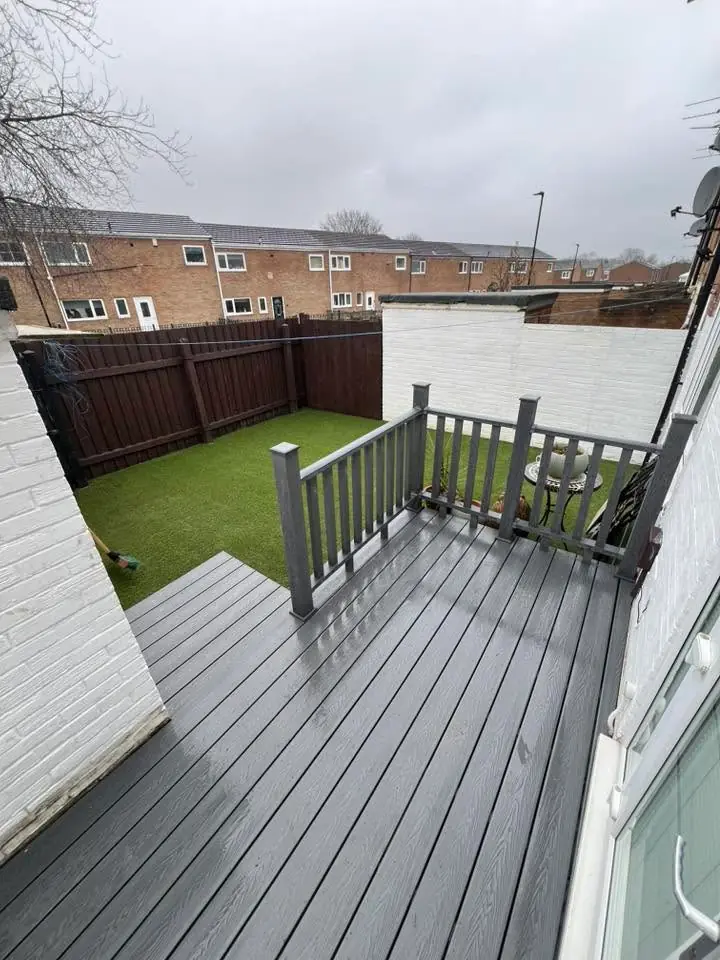
The problem was not the boards
Decking usually gets replaced because the boards look tired. That is the visible part, so it is the part people judge it on.
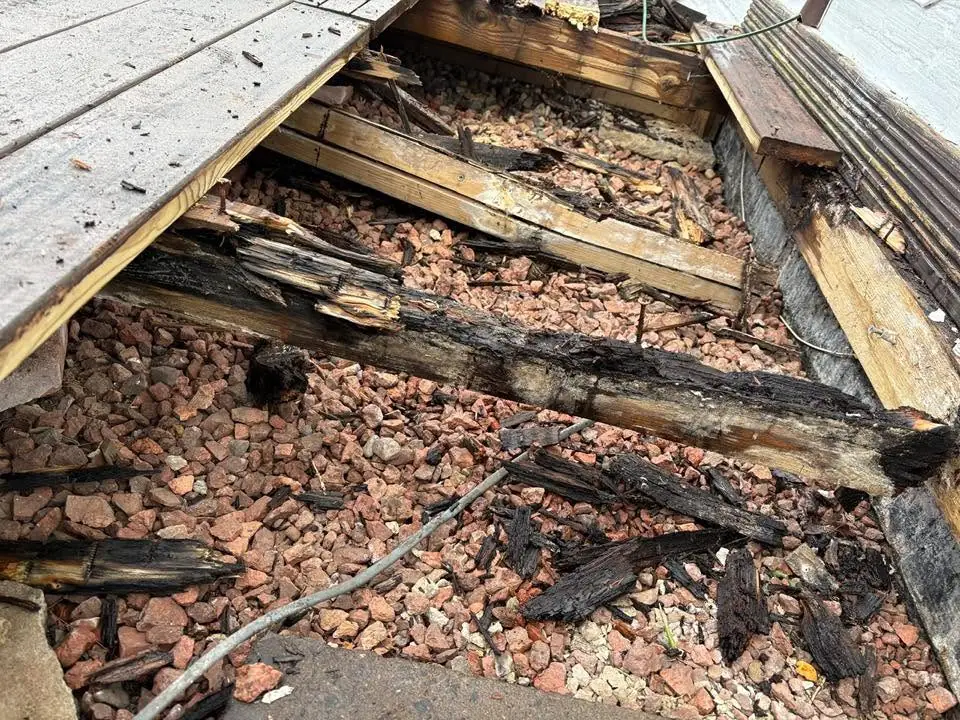
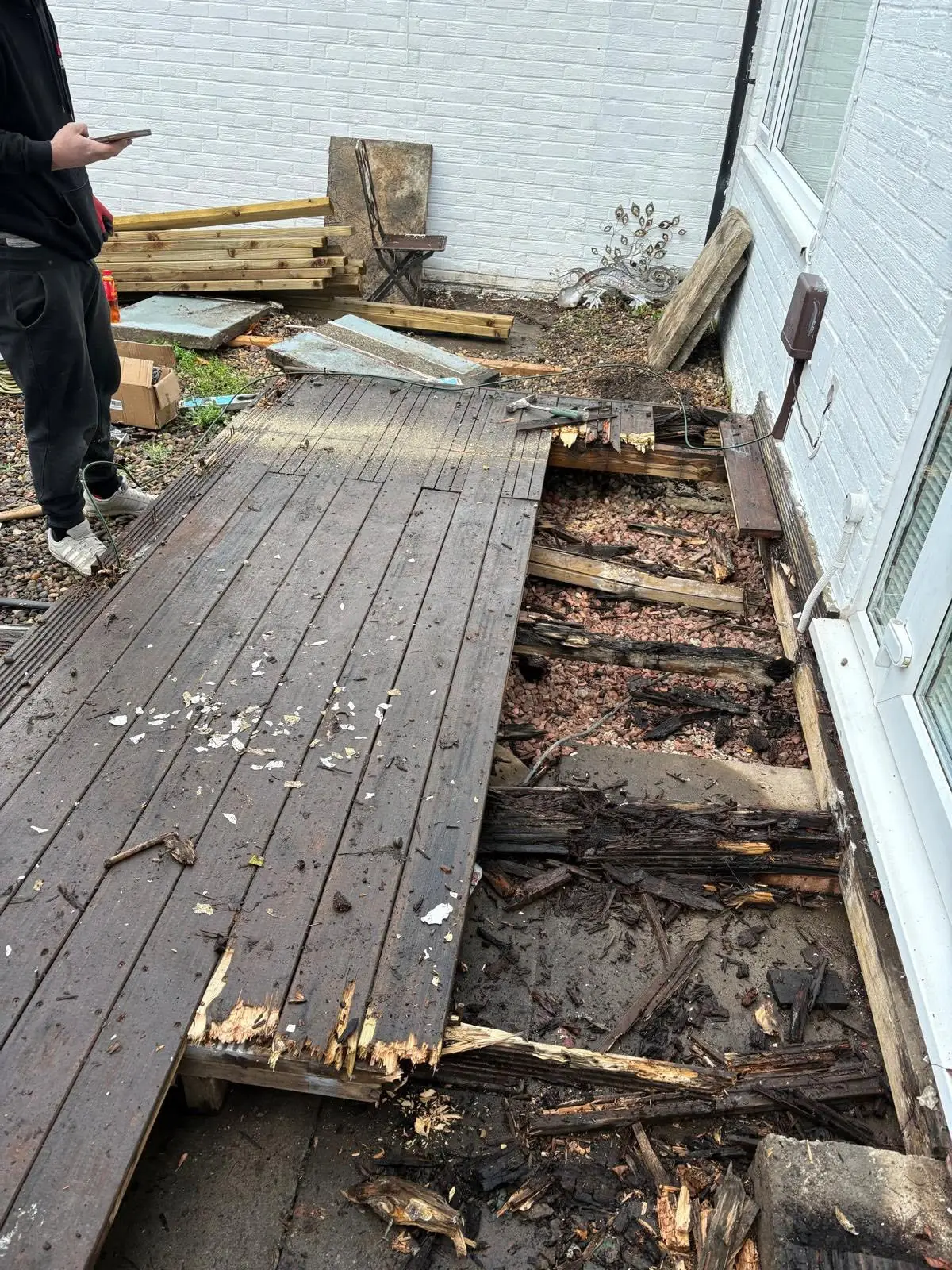
Underneath, this one had a more serious problem. The joists carrying the whole structure had rotted, which is what gives a deck that soft, springy feel underfoot long before anything looks obviously wrong from above.
Why a frame rots and boards do not
Timber decking fails from the bottom up. Water runs through the gaps between boards, which is exactly what it is supposed to do, and ends up sitting on the frame underneath where there is far less air moving and far less sun to dry it out.
So the boards on top, which get rained on constantly, often outlast the joists below them, which only ever get damp. Anything trapped beneath the deck keeps the timber in contact with moisture and speeds it up: soil, leaves, rubble, old debris.
This is why replacing the boards alone so often disappoints. New boards on a failing frame are new boards on a failing frame.
What we did
Everything came up, including the frame. The rotten joists were removed and replaced, which is the only honest fix once rot has gone that far.
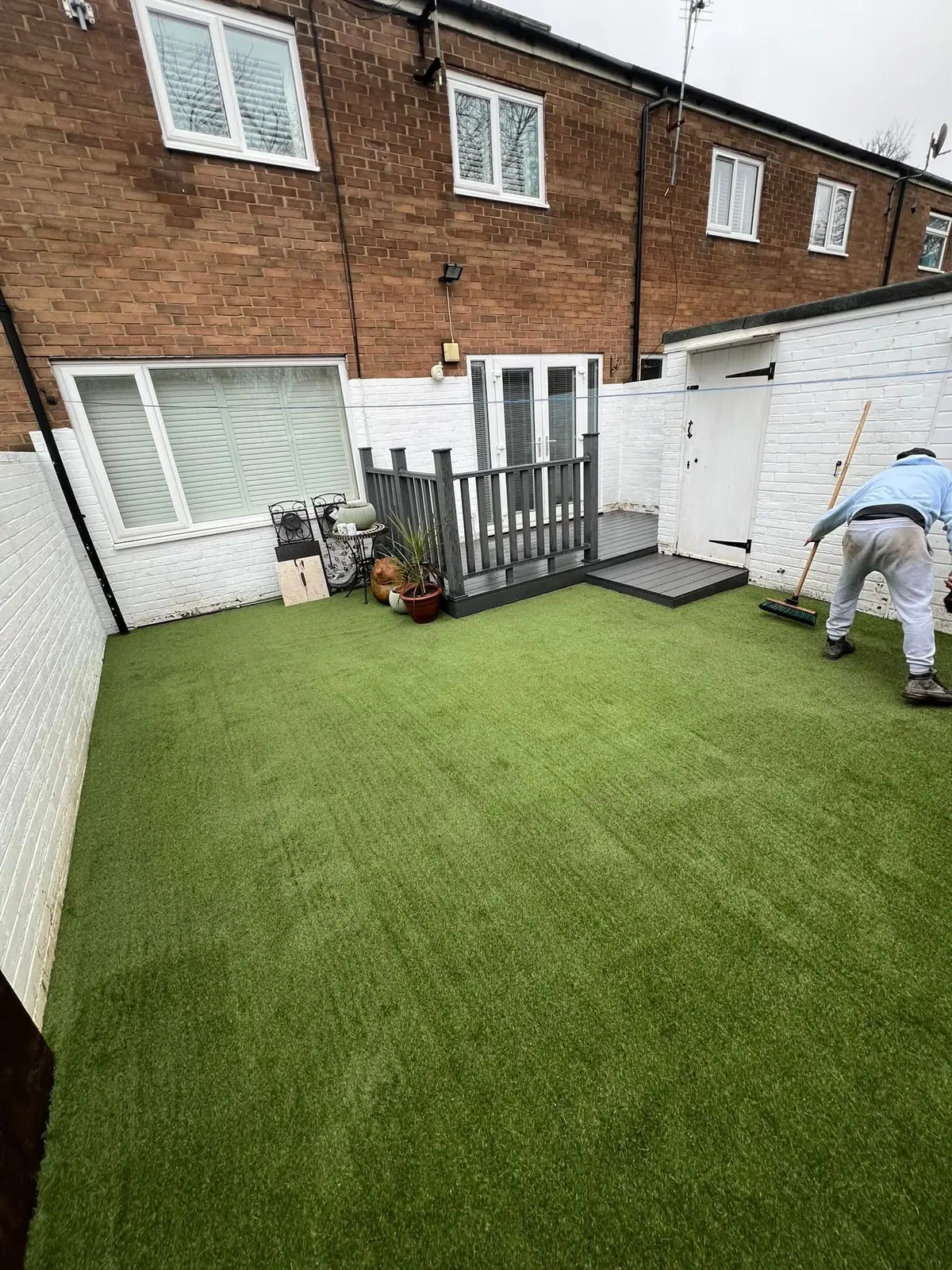
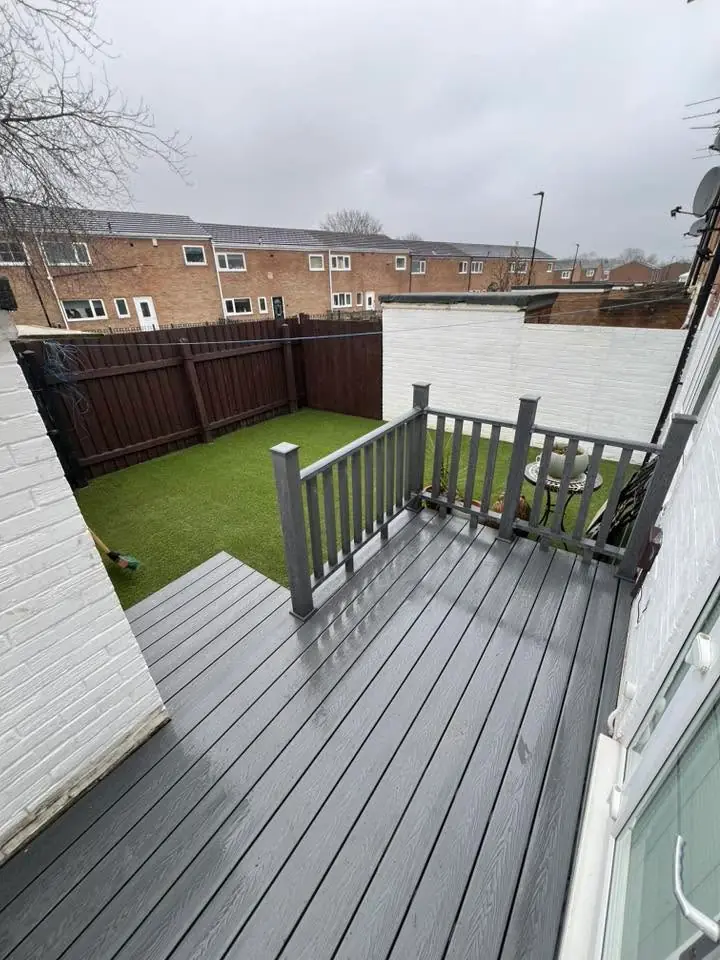
The new surface is composite rather than timber. Composite does not rot, does not need annual treating and does not go slippery and green in the way a neglected timber deck does. For a garden where the whole point was not having to think about it again, that matters more than the material cost.
The rest of the space was finished with artificial grass, which keeps the maintenance consistent across the whole garden rather than solving one half of it.
If your deck feels spongy
That bounce underfoot is the symptom worth paying attention to. It means the frame is flexing, and a frame flexes when the timber has softened.
Standing water, dark staining, boards that move when you walk on them, or screws that no longer hold are all worth a look. The question is not really whether the boards need replacing. It is what state the frame is in, and you cannot tell that without lifting a board.
Our guide on how to plan a garden makeover that works covers thinking about a garden as a whole rather than fixing one feature at a time.
We carry out landscaping work of this kind across Sunderland and the North East.