

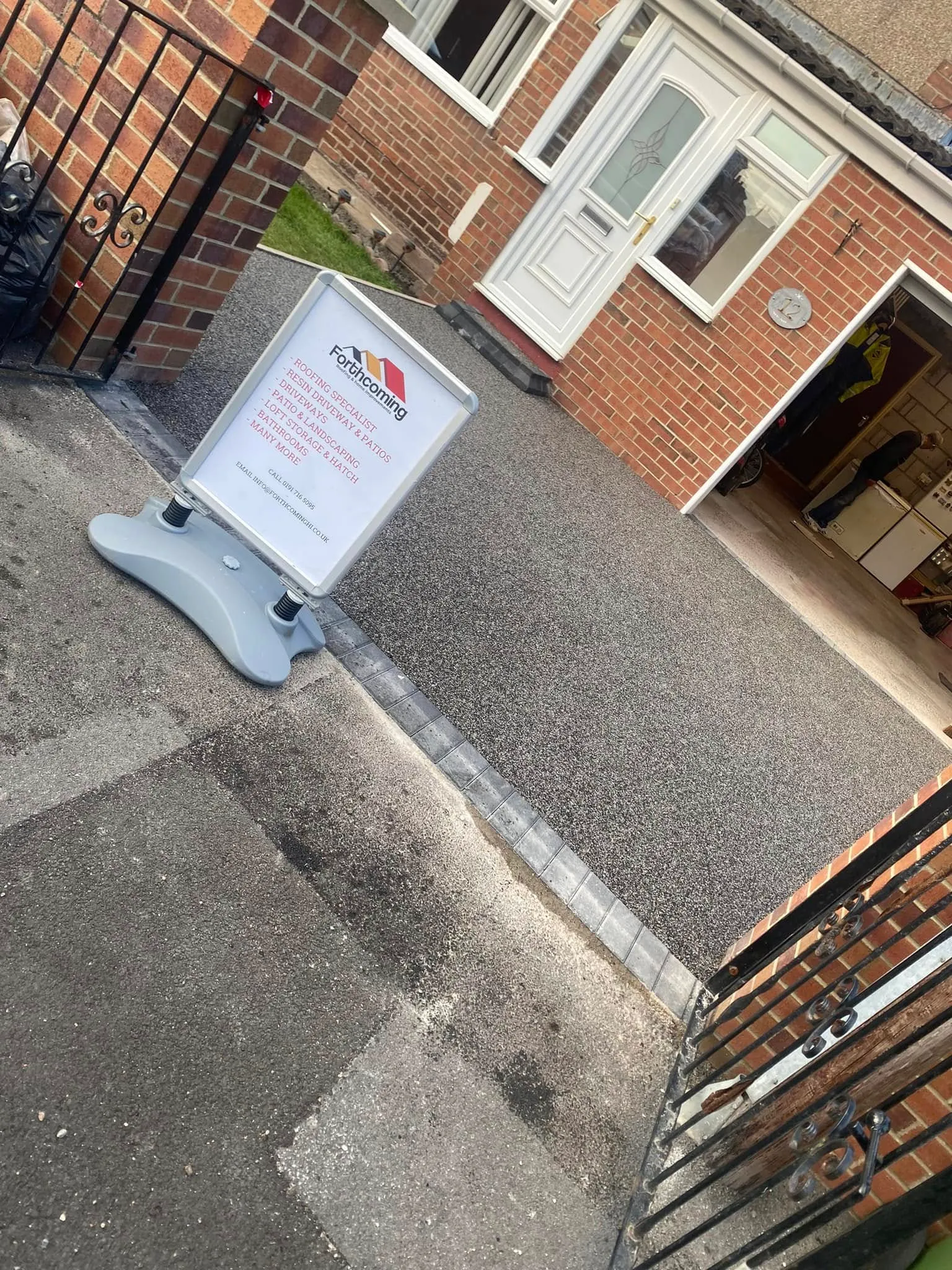
Choosing a new driveway is a bigger decision than many homeowners expect. It affects the way your home looks from the outside, how easy it is to park, how water drains from the surface and how much maintenance you will need to keep on top of in the future.
A driveway that looks good on the first day is not always the best long-term choice. The surface, groundwork, drainage, edging and finish all need to work together. If the wrong surface is chosen, or if the preparation is poor, problems such as sinking, cracking, loose edges and standing water can appear later.
This guide compares four popular driveway options: block paving, resin bound, concrete and tarmac. It explains how each surface works, what to consider before making a decision and how to avoid common mistakes.
If you are planning a new driveway, visit our driveway services page to find out how Forthcoming Group can help.
Key Takeaways
- The best driveway surface depends on your property and how the space will be used
- Block paving offers design flexibility and a traditional finish
- Resin bound driveways create a smooth, modern appearance
- Concrete is a strong and practical option for many homes
- Tarmac can work well for larger or straightforward driveway areas
- Good groundwork and drainage are just as important as the visible surface
What Should You Consider Before Choosing a Driveway?
Before comparing surfaces, it helps to think about what you need from the driveway. A driveway is used every day, so it needs to work practically as well as look right.
Some homeowners want to improve the front of their property. Others need more parking space, easier access or a lower-maintenance surface. In many cases, it is a combination of all these things.
Important things to consider include:
- How many vehicles need to park on the driveway
- Whether cars need space to turn or reverse safely
- How the driveway connects to the house, road or garage
- How much maintenance you are happy to do
- Whether the current area has drainage issues
- What style will suit the property
- The condition of the existing surface
- The amount of preparation needed before installation
The right driveway surface should suit your home, not just look good in isolation. A surface that works well for one property may not be the best option for another.
Block Paving Driveways
Block paving is one of the most popular driveway choices in the UK. It is made from individual blocks laid in a pattern over a prepared base.
The main advantage of block paving is flexibility. There are different colours, styles, patterns and edging options, which means the finished driveway can be designed to suit the property.
Best for:
- Homeowners who want a traditional driveway finish
- Properties where design and kerb appeal matter
- Driveways with defined edges, patterns or borders
- Areas where individual blocks may need replacing in the future
Things to consider:
- It needs proper ground preparation to prevent movement
- Weeds can appear between joints if maintenance is ignored
- Poor edging can lead to blocks spreading or moving
- Regular cleaning may be needed to keep the surface looking its best
Block paving can be a strong option when the base, edges and levels are handled correctly. It is also useful where homeowners want the driveway to look more detailed than a plain surface.
Resin Bound Driveways
Resin bound driveways are made by mixing natural aggregate with resin before applying it as a smooth surface. The result is a neat, modern finish that can work well for many types of property.
Resin bound is often chosen by homeowners who want a clean appearance without the pattern of block paving or the plain look of tarmac.
Best for:
- Homeowners who want a smooth, modern finish
- Properties where appearance is a key factor
- Driveways where a neat, consistent surface is preferred
- Customers looking for a surface with less visible jointing
Things to consider:
- The base must be suitable and prepared properly
- Poor installation can lead to cracking or loose areas
- Drainage and edging still need to be planned carefully
- The finished appearance depends on the aggregate chosen
Resin bound can create a smart driveway, but it should not be chosen on appearance alone. The condition of the base and the installation method are important for long-term performance.
Concrete Driveways
Concrete driveways are known for being strong, practical and suitable for a wide range of homes. They can be used where the customer wants a durable surface without choosing a patterned or aggregate finish.
Concrete may not always be the most decorative option, but it can be a sensible choice where strength and practicality are the main priorities.
Best for:
- Homeowners who want a strong driveway surface
- Practical parking areas
- Properties where a simple finish is preferred
- Driveways that need to cope with regular vehicle use
Things to consider:
- The finish is less flexible than block paving
- Cracking can happen if preparation or joints are not handled correctly
- Drainage must be considered before installation
- The appearance may not suit every property
Concrete can be a reliable choice when the groundwork, thickness, levels and finishing are planned properly. It is often chosen by homeowners who want something straightforward and durable.
Tarmac Driveways
Tarmac is a practical driveway surface that can work well for larger or more straightforward areas. It is commonly used where a clean, simple and reliable finish is needed.
Tarmac does not offer the same design flexibility as block paving or the same modern appearance as resin bound, but it can be a good option for many homes.
Best for:
- Larger driveway areas
- Simple, practical parking spaces
- Homes where a dark, uniform finish suits the property
- Customers wanting a straightforward surface
Things to consider:
- It offers less design choice than block paving or resin
- Edges need to be well supported
- Repairs can be more visible than with individual block paving
- The finished look is more functional than decorative
Tarmac is often a sensible option where the main priority is a practical driveway that can handle regular vehicle use.
Driveway Surface Comparison
| Feature | Block Paving | Resin Bound | Concrete | Tarmac |
|---|---|---|---|---|
| Appearance | Traditional and flexible | Smooth and modern | Simple and practical | Clean and functional |
| Design choice | High | Moderate | Low to moderate | Low |
| Maintenance | Moderate | Low to moderate | Low | Low |
| Repairs | Individual blocks can be replaced | Repairs can be harder to blend | Repairs may show | Repairs may show |
| Best for | Kerb appeal and detail | Modern finishes | Strength and practicality | Larger simple areas |
| Preparation needed | High | High | High | High |
Why Groundwork Matters
The surface is the part of the driveway you see, but the preparation underneath is what helps it last.
Poor groundwork is one of the biggest reasons driveways fail. If the base is not prepared correctly, the surface can sink, move, crack or become uneven. This can happen with any driveway type, including block paving, resin bound, concrete and tarmac.
Good driveway preparation may include:
- Removing the existing surface
- Excavating to the correct depth
- Preparing a suitable sub-base
- Compacting the base properly
- Planning levels and falls
- Installing or supporting edges
- Considering drainage before the surface goes down
A well-installed driveway should not be treated as just a surface finish. What happens underneath matters just as much as the material you choose.
Drainage and Standing Water
Drainage should always be considered before a new driveway is installed. If water has nowhere to go, it can create puddles, affect the surface and cause problems around the property.
Some homes already have drainage issues before work begins. Others develop problems because the new driveway has not been planned with the correct levels or falls.
Things to consider include:
- Where rainwater currently goes
- Whether water runs towards the house
- Whether there are existing drains
- How the driveway slopes
- Whether the surface allows water to pass through or run off
- Whether extra drainage may be needed
A driveway should be planned so water is managed properly. This is especially important where the driveway sits close to the house, garage or boundary.
Choosing Based on the Style of Your Home
The right driveway should suit the style of your home as well as your practical needs.
A traditional property may suit block paving because of the choice of colours, patterns and edging. A more modern home may suit resin bound because of its clean, smooth appearance. Concrete may work well for practical areas, while tarmac can suit larger driveways or homes where a simple finish is preferred.
It is also worth thinking about how the driveway works with other parts of the property, including:
- Brickwork
- Walls and borders
- Garden areas
- Paths and entrances
- Garages
- Road frontage
- Boundary lines
A driveway can make a big difference to the first impression of your home, so the surface should feel like it belongs with the property.
Common Mistakes to Avoid
A new driveway is a significant investment, so it is worth avoiding the most common mistakes homeowners make.
Choosing the surface based on appearance alone
A surface may look good, but it still needs to suit the property, parking requirements and maintenance expectations.
Ignoring the preparation underneath
Poor groundwork can cause problems even if the surface material itself is suitable. Always ask how the area will be prepared.
Not thinking about drainage
Standing water can make a new driveway frustrating to use and may cause longer-term issues.
Choosing the cheapest quote without comparing details
A cheaper quote may leave out important preparation, edging or drainage work. Make sure you understand what is included.
Forgetting how the driveway will be used every day
A driveway needs to work for parking, access, bins, deliveries and everyday movement around the home.
Should You Replace or Extend Your Driveway?
Some homeowners need a complete driveway replacement because the existing surface is damaged, uneven or no longer suitable. Others want to create more parking space for a growing household.
A replacement may be the better option if:
- The existing surface is cracked, uneven or sinking
- Drainage problems are affecting the driveway
- The current driveway looks tired or dated
- The surface has reached the end of its useful life
- You want to change the material or layout
A driveway upgrade may be suitable if the existing area still works but needs improving. This might include changing the surface, improving edges or creating a more practical layout.
A survey can help identify whether the existing driveway can be improved or whether a full replacement is the better long-term choice.
Frequently Asked Questions
What is the best type of driveway for a home?
The best type of driveway depends on the property, budget, style and how the space will be used. Block paving, resin bound, concrete and tarmac can all be suitable when installed correctly.
Is block paving better than resin bound?
Neither option is better for every home. Block paving offers more design flexibility and a traditional look, while resin bound gives a smoother and more modern finish. The right choice depends on the property and what you want from the driveway.
Are concrete driveways a good option?
Yes, concrete driveways can be a good option for homeowners who want a strong and practical surface. Good preparation is important to reduce the risk of cracking or future problems.
Is tarmac suitable for a residential driveway?
Yes, tarmac can be suitable for residential driveways, especially where a simple, practical and hard-wearing surface is needed. It is often used for larger or more straightforward areas.
How long does a new driveway take to install?
Timescales depend on the size of the area, the chosen surface and the amount of preparation required. A smaller driveway may take less time, while larger or more detailed projects may take longer.
Why is my driveway sinking?
Sinking is often caused by poor preparation, an unsuitable sub-base, weak edging or water movement beneath the surface. A proper assessment can help identify the cause.
Do I need drainage for a new driveway?
Drainage depends on the property, surface and layout. Water should be managed properly so it does not collect on the driveway or run towards the house.
Do Forthcoming Group install driveways in Sunderland?
Yes, Forthcoming Group installs driveways across Sunderland and the North East, including block paving, resin bound, concrete and tarmac driveways.
Making the Right Decision
Choosing the right driveway surface is not just about picking the one that looks best. It is about choosing a surface that suits your home, handles regular use and is installed with the correct preparation.
Block paving, resin bound, concrete and tarmac all have their place. The best choice depends on the size of the driveway, the style of your property, your maintenance preferences and how the space needs to work day to day.
If you are planning a new driveway in Sunderland, Forthcoming Group can assess your property, explain the options and provide a clear quote for the work.